
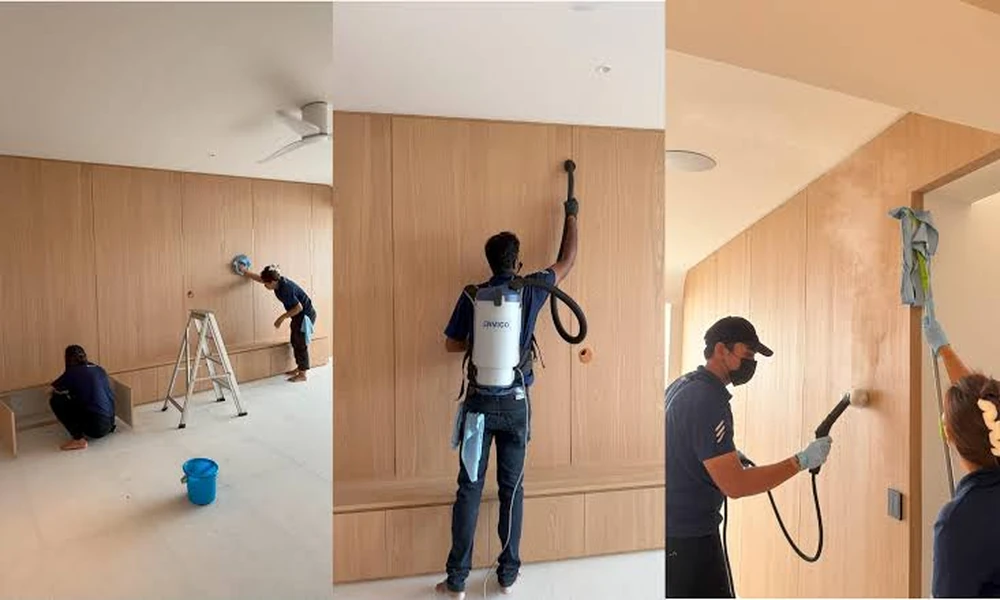

Renovating a home can completely transform the way it looks and feels, but the work rarely ends when the builders pack up their tools. Fine dust, paint residue, packaging, adhesive marks and construction debris can remain throughout the property even after the main work is finished. This is why many homeowners arrange a professional home cleaning service once renovations are complete. A thorough post-renovation clean helps remove the mess left behind by building work and prepares the home to be comfortably lived in again.
Renovation Dust Travels Everywhere
One of the biggest cleaning challenges after renovation work is dust.
Sanding, drilling, cutting timber, plastering and removing old materials can all create extremely fine particles. Unlike ordinary household dust, construction dust can spread far beyond the room where the work took place.
It can settle on window frames, shelves, light fittings, skirting boards and furniture. It may also travel through hallways and into rooms that were not directly renovated.
Even when doors are closed during construction, fine dust can still find its way through small gaps.
This is why simply vacuuming the renovated room is often not enough.
A proper post-renovation clean usually requires working through the property carefully and removing dust from both obvious and less visible areas.
Fine Dust Can Keep Returning
Homeowners sometimes clean immediately after building work and then wonder why surfaces look dusty again the next day.
This is common after renovations.
Fine particles can remain suspended in the air for some time before settling. Dust may also sit on top of cabinets, door frames and other high surfaces before gradually falling onto areas that have already been cleaned.
For this reason, cleaning often needs to follow a top-to-bottom approach.
High surfaces should be cleaned first, followed by walls, fittings, furniture and finally floors.
Vacuuming with suitable equipment and wiping surfaces with damp microfibre cloths can help capture particles rather than simply moving them around.
Floors Can Be Covered in More Than Dust
Renovations can leave several types of residue on flooring.
Timber floors may have fine sawdust, plaster particles or footprints. Tiles may have grout haze, while other floors can be left with small paint spots or adhesive marks.
New flooring itself may also need careful cleaning after installation.
The correct method depends on the material.
Harsh scraping or unsuitable chemicals can damage a newly installed surface, which makes it important to identify exactly what is being removed before starting.
Loose construction debris should generally be removed before mopping or wiping the floor.
Otherwise, small particles can scratch certain surfaces as they are pushed around.
Windows Often Need Extra Attention
Windows can become surprisingly dirty during renovation work.
Dust settles on the glass, frames, tracks and screens. Painting or plastering near windows may also leave small marks.
Protective films or stickers sometimes leave adhesive residue behind after removal.
Cleaning the glass alone may not be enough.
Window tracks can hold large amounts of fine dust, while frames and sills may need detailed wiping.
In newly renovated spaces with large windows or sliding doors, these areas can make a major difference to the overall appearance of the finished room.
Clean windows also allow more natural light into the property, helping the renovation look its best.
Kitchens Collect Construction Residue Too
Newly renovated kitchens often look impressive, but they can still require substantial cleaning before use.
Cabinets may contain dust inside drawers and shelves. Benchtops can have adhesive residue or fingerprints from installation, while handles and appliances may still have protective films.
Dust can also settle inside cupboards even if the doors remained closed during construction.
Before putting food, plates or cookware back into the kitchen, it is worth wiping the inside of storage areas.
Sinks, splashbacks and benchtops should also be cleaned using products suitable for their material.
New stone surfaces, timber finishes and specialty coatings may have specific care requirements, so stronger chemicals are not always the best choice.
Bathrooms Need More Than a Quick Wipe
Bathroom renovations can leave behind grout dust, silicone residue, water marks and construction debris.
Shower screens may have fingerprints or adhesive from installation.
Tiles can also be left with a dull film after grouting.
Detailed cleaning around taps, shower fittings, drains and tile edges can help reveal the finished appearance of the renovation.
However, recently installed materials may need time to cure.
Fresh grout, sealants, silicone and painted surfaces should be treated according to the installer’s instructions before heavy cleaning.
Cleaning too aggressively too soon could damage a new finish.
Cabinets, Drawers and Storage Areas Are Easily Forgotten
One of the most overlooked parts of post-renovation cleaning is inside storage areas.
Builders and tradespeople may have worked around open cabinets, wardrobes and drawers while installing fixtures.
Fine dust can easily settle inside.
If these spaces are not cleaned before belongings are returned, dust may transfer onto clothes, kitchenware and other items.
Vacuuming and wiping inside cabinets before restocking them can save a lot of extra cleaning later.
The same applies to wardrobes, linen cupboards and built-in shelving.
Light Fittings and High Surfaces Collect Dust
Renovation dust often settles in places people do not immediately see.
The tops of door frames, ceiling fans, pendant lights, air-conditioning vents and high shelves can all collect particles.
If these areas are ignored, dust may gradually fall back onto cleaned surfaces.
Light fittings should be cleaned carefully, particularly if electrical work has recently been completed.
Ceiling fans and vents are also worth checking before they are switched on, as they may redistribute dust throughout the room.
Post-Renovation Cleaning Is More Detailed Than Regular Cleaning
A normal weekly or fortnightly clean focuses mostly on everyday household dirt.
Post-renovation cleaning is different because it involves removing construction-related residue from many surfaces.
It may require repeated vacuuming, detailed wiping, adhesive removal, window-track cleaning and careful treatment of newly installed materials.
There may also be areas that need to be cleaned several times before all fine dust is removed.
This makes the process more detailed and time-consuming than a typical household clean.
A Clean Finish Helps You Enjoy the Renovation
After spending time and money renovating a property, the final result should feel fresh and ready to use.
Dusty floors, dirty windows and construction residue can take attention away from new cabinetry, fresh paint and updated finishes.
A thorough post-renovation clean helps reveal the work that has been completed and makes the transition back into the home much easier.
By carefully removing construction dust and cleaning each new surface appropriately, homeowners can protect their renovation while creating a cleaner, more comfortable space to enjoy.
Why Newly Renovated Homes Often Need a Professional Post-Renovation Clean
