
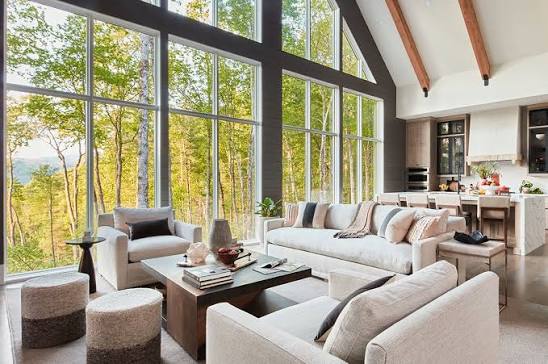

Windows have an enormous influence on how a room feels, but their effect is not limited to the amount of natural light they bring in. Their position, proportions, and relationship to the ceiling can make a room appear taller, wider, grander, or more intimate. The window treatment you choose can either enhance those proportions or unintentionally emphasize awkward ones.
That is why there is no single formula for dressing every window beautifully. A treatment that looks perfectly proportioned in a room with soaring ceilings may feel cumbersome in a compact space, while a shade that works wonderfully beneath a low ceiling can look underwhelming in a grand room.
The good news is that curtains, roman shades, and other window treatments give you plenty of opportunities to visually adjust the proportions of a space. With the right placement, scale, fabric, and fullness, you can make the architecture work in your favor.
How to Dress Windows in Rooms With Low Ceilings
Low ceilings can make a room feel compact, particularly when the windows themselves sit relatively close to the ceiling. The aim here is to create as much visual height as possible without making the window treatment feel forced.
One of the simplest techniques is to mount curtains higher than the window frame. Instead of placing the rod directly above the window, position it closer to the ceiling. The curtain fabric then creates a long vertical line from top to bottom, encouraging the eye to travel upward.
This works best when the curtains extend all the way to the floor. Short curtains interrupt that vertical line and can make the ceiling feel lower. Full-length panels, by contrast, visually stretch the room.
The effect does not require a dramatic difference in color. Custom curtains that blend relatively closely with the wall can create an uninterrupted vertical plane, while a subtle tonal contrast provides definition without breaking up the space.
Extend the Curtain Width, Too
The height of the rod is important, but width can also make a difference.
Extending the curtain rod beyond the window frame allows the panels to sit outside the glass when they are open. This makes the window appear wider and keeps more of the glass visible, which can make the room feel brighter and more spacious.
It also prevents the curtains from crowding the window itself.
In a small room, this simple adjustment can make the treatment feel much more architectural and intentional. Rather than looking like a piece of fabric attached to a window, the curtains become part of the room’s vertical and horizontal structure.
Keep the Treatment Visually Light
Low ceilings often benefit from curtains that feel substantial enough to look luxurious but not so heavy that they visually weigh down the room.
Light to medium-weight linen, cotton, and softly textured fabrics can be excellent choices. They create movement and softness without adding excessive bulk.
If the room already contains dark furniture or substantial architectural details, consider balancing those elements with lighter curtains. A warm white, ivory, soft beige, or pale gray can help maintain a sense of openness.
That does not mean darker curtains are off limits. A deep color can work beautifully in a small room when used intentionally, particularly when the rest of the palette is controlled.
Roman Shades Can Be a Smart Choice for Low Ceilings
Full-length curtains are not always practical. If there is furniture directly beneath the window, a narrow walkway, or simply not enough wall space for drapery, roman shades can provide a more streamlined alternative.
Because they fit neatly within or above the window opening, roman shades preserve valuable wall space and keep the room visually clean.
A tailored shade in a light, textured fabric can add softness without creating a strong horizontal break. If the window is positioned relatively high on the wall, a shade can also help maintain the architectural sense of height.
Custom roman shades are particularly useful when the proportions of the window are unusual or when you want the treatment to align precisely with surrounding architectural details.
How to Dress Windows in Rooms With High Ceilings
High ceilings present the opposite challenge. Instead of trying to create more height, you may want to make the room feel more grounded and proportionate.
Large-scale windows can handle substantial treatments beautifully. Floor-to-ceiling curtains with generous fullness can emphasize the grandeur of the architecture while giving the space a sense of softness and intimacy.
Here, you generally do not need to worry about making the curtains look too tall. The scale of the room can accommodate them.
In fact, undersized curtains can look more problematic in a room with high ceilings than oversized ones. A narrow curtain panel hanging over a large window can appear almost lost against the surrounding architecture.
Use Fullness to Match the Scale
High-ceilinged rooms often benefit from curtains with enough fullness to create substantial folds.
This is particularly effective in living rooms, dining rooms, and bedrooms where you want the windows to feel luxurious rather than purely functional.
The fabric matters, too. Velvet, substantial linen, textured cotton, and other fabrics with body can hold beautiful folds and provide the visual weight that a large room requires.
The aim is not to make the curtains heavy for the sake of it. It is to make sure the treatment feels appropriately scaled to the architecture.
Don’t Be Afraid of Pattern
Large rooms can often accommodate patterns that would feel overwhelming in a smaller space.
A large-scale floral, geometric, stripe, or botanical pattern can look spectacular across expansive windows. Because there is more visual space around the treatment, the pattern has room to breathe.
If you are working with exceptionally high ceilings, a bold curtain can also help make the room feel more intimate by giving the eye something substantial to engage with.
That said, pattern should still relate to the rest of the room. Large-scale does not automatically mean loud.
A tonal pattern can create just as much impact through texture and scale as a high-contrast print.
Use Curtains to Create Intimacy
High ceilings can sometimes make a room feel a little cavernous. Curtains can counteract this by introducing softer, more tactile surfaces.
Think beyond simply covering the glass.
Large curtains can create a sense of enclosure around seating areas, particularly when the windows occupy an entire wall. Rich textiles, warm neutrals, and generous folds can make the space feel more inviting without compromising the sense of grandeur.
This is where the fabric’s tactile quality becomes particularly important.
A room with high ceilings, polished floors, and large expanses of glass can benefit enormously from textiles that absorb and soften the visual environment.
What About Rooms With Average Ceiling Heights?
Most homes fall somewhere between low and dramatically high ceilings, and these rooms offer plenty of flexibility.
The principles remain the same: pay attention to proportion, mount curtains thoughtfully, and choose a scale that relates to the architecture.
For a standard-height room, floor-length curtains mounted somewhat above the window frame are generally a safe and elegant approach. Extending the rod beyond the frame can make the window feel larger, while sufficient fullness ensures the curtains look substantial when closed.
You have more freedom with color and pattern here because the architecture is unlikely to impose the same scale constraints as an unusually small or grand room.
Consider the Window’s Position
Ceiling height is only one part of the equation.
A window positioned very close to the ceiling creates a different challenge from one sitting low on the wall. Likewise, a short, wide window needs to be treated differently from a tall, narrow one.
Look at the relationship between the window, ceiling, floor, and surrounding walls.
If there is a large amount of wall above the window, hanging the curtain closer to the ceiling can visually connect the two. If the window already extends close to the ceiling, there may be less need to exaggerate the height.
The goal is always to create intentional proportions.
Use Color to Alter Perception
Color can subtly influence how large or small a window treatment feels.
Light-colored curtains tend to feel visually lighter, making them useful in compact rooms where you want to preserve openness. Darker curtains can create more visual weight and can therefore work beautifully in large rooms that need grounding.
However, the relationship between curtain and wall color matters more than the curtain color alone.
Curtains that closely relate to the wall color create a more continuous visual field. Contrasting curtains create a stronger frame around the window and make the treatment more prominent.
Neither approach is inherently better.
Choose based on whether you want the window treatment to blend in or become a feature.
Don’t Forget the Floor
The finished curtain length can dramatically change how polished the treatment looks.
For a luxurious appearance, curtains should generally extend all the way to the floor. The exact finish can vary depending on the desired aesthetic, from a clean break at the floor to a slightly relaxed puddle.
In most modern interiors, a precise floor-length finish tends to look the most tailored.
Curtains that stop several inches above the floor can make even beautiful fabric look less substantial, particularly in rooms where you are trying to emphasize height.
The bottom edge matters more than it may seem.
Use Scale as Your Guiding Principle
Whether your ceilings are low, high, or somewhere in the middle, proportion should guide every decision.
Small rooms tend to benefit from treatments that feel light and vertically oriented. Large rooms can handle more fabric, stronger patterns, and greater visual weight. Standard-height spaces offer the greatest flexibility, but even here, the relationship between window and surrounding architecture matters.
Think about the treatment as part of the architecture rather than an accessory added afterward.
A well-designed curtain can make a window feel larger. A well-proportioned roman shade can make a compact opening feel intentional. A carefully selected fabric can soften a large room and give it a sense of intimacy.
When Custom Makes the Difference
Standard window treatments can work perfectly well in straightforward spaces, but unusual proportions often reveal their limitations.
A low-ceilinged room may require a very specific curtain height. A high-ceilinged room may need extra-wide panels and substantial fullness. An unusually tall or wide window may require careful pattern placement and specialized construction.
This is where custom curtains can offer a significant advantage.
Rather than beginning with a predetermined size, the treatment is designed around the actual window and the proportions of the room. You can control the finished length, width, fullness, fabric, lining, and heading style, allowing the entire treatment to feel integrated with the architecture.
The Window Treatment Should Work With the Room
The best window treatment does not simply cover the glass. It helps correct, emphasize, or balance the proportions around it.
For low ceilings, think vertically. Mount curtains higher, use full-length panels, and keep the visual weight controlled.
For high ceilings, think about scale. Use enough fabric and fullness to make the treatment feel proportionate, and do not shy away from larger patterns or richer textures.
For everything in between, focus on balance. Consider the position of the window, the amount of wall around it, the furniture beneath it, and the overall material palette.
Ultimately, beautiful window design is less about following rigid rules and more about understanding proportion. Once you start looking at curtains and shades as architectural elements rather than simple coverings, their potential becomes much greater.
A well-dressed window can make a low room feel taller, a lofty room feel more intimate, and an ordinary room feel remarkably considered.
