
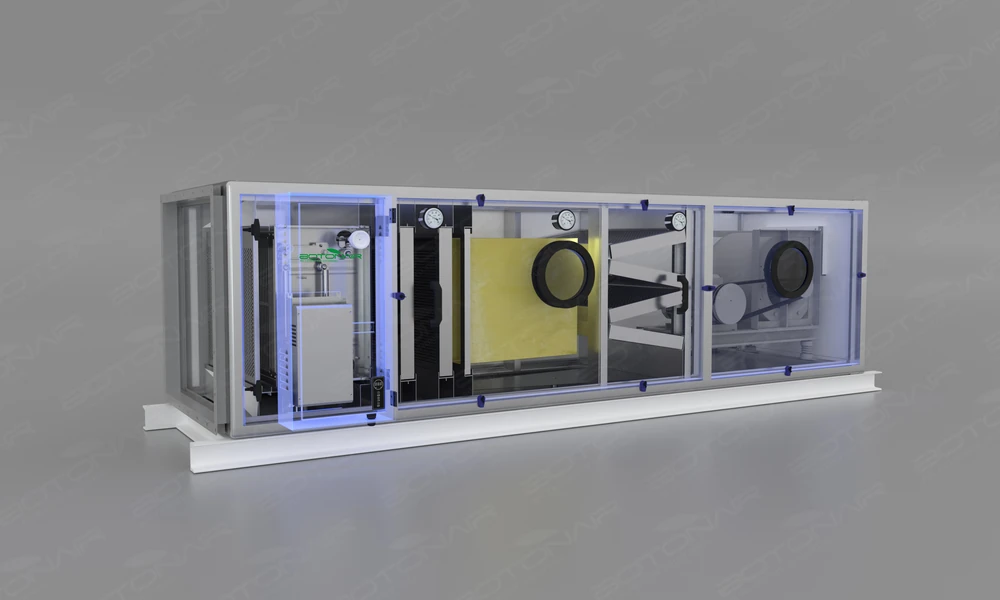

A restaurant reports an exhaust problem, the property manager contacts a contractor, and the first response is to book a cleaning visit. That may be appropriate, but it may also miss an equipment fault or a changed operating duty. An ecology unit contains several treatment functions, so a general complaint does not identify which trade should attend or what work should be authorised.
The practical task is to separate fault diagnosis, maintenance history and design changes before turning an uncertain symptom into a repair order. Electrostatic precipitation, UV-C and activated carbon need different evidence. A useful service call gives the responsible contractor enough information to investigate, while keeping the restaurant’s observations distinct from a technical diagnosis.
Describe the event before naming the failed component
Record when the problem was noticed, what cooking was taking place and where the observation was made. Distinguish an unusual indicator at the equipment from an odor report at the discharge or poor capture above the cooking line. Include whether the condition is continuous or tied to a particular operating period.
Specific observations help the technician. A report describing which indicator changed during an evening service, what was cooking at the time and which work had recently been completed provides a better starting point than a general complaint, while photographs preserve the visible condition without measuring particle removal or odor-treatment performance. Keep the original observation intact.
Ask staff to record observations through their normal safe reporting process. Technical inspection, isolation and fault diagnosis belong with qualified service personnel following the equipment instructions. The property team does not need an improvised inspection procedure to make the initial report useful.
Identify the stages that actually exist on the site
Polygee’s description of an ecology unit separates electrostatic precipitation for particles from UV-C and activated carbon treatment of parts of the gas-phase load. Those distinctions make the stage list useful during a service call. A site may need attention to one stage without evidence that every stage has failed.
Find the installed-equipment schedule, model identities and most recent arrangement drawing. Confirm which stages are present before forwarding a generic manufacturer brochure to the contractor. Describe any difference between the installed assembly and the original proposal explicitly in the request.
The service brief should identify the exact asset and the observed issue. It should also say what remains unknown. An honest unknown helps the technician choose an investigation; an unsupported diagnosis can send the wrong replacement part or the wrong trade to the site.
Use maintenance history to test the cleaning explanation
Review what the last service actually included. A visit date does not establish that collector cells were cleaned, consumables were replaced or the equipment was returned to its intended operating condition. Look for the component names, work performed, findings and any outstanding recommendations.
Polygee describes the LK-E collector cells as washable components. That supports planning a recurring cleaning task; it does not establish the condition of a particular installed cell. If fault diagnosis points toward the electrostatic stage, its maintenance history should inform the investigation without replacing inspection of the actual equipment.
Missing records leave an evidence gap. Rather than declaring maintenance overdue by assumption, ask the contractor to establish the current condition and propose subsequent work against the manufacturer’s instructions and the kitchen’s duty, giving the property manager a specific reason for the proposed visit and a record that can guide later service decisions. Unverified history is not a diagnosis.
Do not treat every odor report as a collector fault
The US Environmental Protection Agency’s general guidance on activated carbon adsorbers explains that pollutant breakthrough occurs before saturation capacity is reached. Its monitoring discussion separates outlet pollutant information from supporting operating indicators. This is general industrial guidance, not a test of the equipment in a particular restaurant, but it explains why media condition cannot be reduced to an installation date.
An odor report should prompt review of the actual treatment arrangement and operating conditions. It does not, on its own, prove that the electrostatic collector has failed. Nor does a normal pressure reading demonstrate that activated carbon retains the adsorption capacity required for the current load.
For an assembly with UV-C, identify its service history separately. Send the technician the available lamp records and equipment details rather than assuming that a previous cell-cleaning visit also covered the gas-phase stages. Each stage needs a clear investigation scope.
Bring the fan and duct contractor in when the symptom crosses boundaries
A treatment supplier may be able to assess its cabinet while another contractor understands the fan and duct system. If the reported condition concerns delivered airflow or capture, the service arrangement should connect those responsibilities. Asking one party to certify an undefined whole system invites an answer that does not resolve the restaurant’s problem.
Give the investigating team the most recent fan selection and balancing information where available. Note subsequent alterations to the duct route or equipment. A new treatment stage can change the resistance seen by the fan even if the original electrostatic cabinet remains untouched.
Appoint a contact to gather the findings. When each contractor identifies the equipment examined, the conditions observed and any work outside its remit, that contact can combine the results into a service record that gives the next technician a defined starting point instead of a collection of invoices from disconnected visits. Preserve unresolved questions in that record.
Separate restoration work from a changed design requirement
A restaurant may have extended trading hours, introduced a different cooking process or altered the appliance layout since the equipment was selected. Record these changes when investigating an event. The original selection assumptions may no longer describe the current duty, even when no component is broken.
The manufacturer’s carbon guidance links service needs to cooking load. That is a reason to review the operating basis when conditions change, rather than promising that replacement media will last for the same period as before. Electrostatic precipitation, UV-C and activated carbon should each be reviewed against the duty assigned to them.
Ask the contractor to distinguish a proposal to restore the existing equipment from a proposal to change its capability. The former might concern a diagnosed defective component or required maintenance. The latter needs a design review and a revised scope. Combining them under a generic repair label makes later acceptance difficult.
Allocate the service work without inventing legal responsibility
The restaurant, property manager, equipment supplier and maintenance contractor may each hold different information. Who pays, who grants access and who authorises work depends on the actual agreements and property arrangements. An equipment article cannot assign those obligations for a particular lease or site.
Agree on the immediate service arrangements. Before the cause is known, the restaurant and property team can still establish who provides access, sends the records, approves the investigation scope and receives the findings, while confirming how the attending contractor will coordinate the visit with the kitchen’s operating schedule. That preparation does not prejudge the cause.
A useful instruction asks the attending contractor to report both completed work and unresolved issues. Any recommendation for another trade should explain why it is needed and identify the relevant interface. This makes a second visit a defined continuation of the investigation instead of a repetition of the first conversation.
Close the call with evidence of what changed
A closed invoice should not be the only evidence that the service call is complete. Keep the diagnosis, work performed, replaced parts or consumables, operating checks and remaining recommendations together. Relate the checks to the original complaint so the property team can see whether it was addressed.
If the cause remains uncertain, record that outcome and the next investigation step. If the equipment was restored but the duty has changed, preserve both conclusions. A functioning ecology unit and an adequate treatment design are connected questions, but a successful repair does not settle both automatically.
The next service call should begin with this record. Over time, clear reports help the restaurant distinguish recurring equipment issues from gaps in maintenance or changing operating demands. They also give contractors a better starting point than a familiar complaint with no history attached.
