
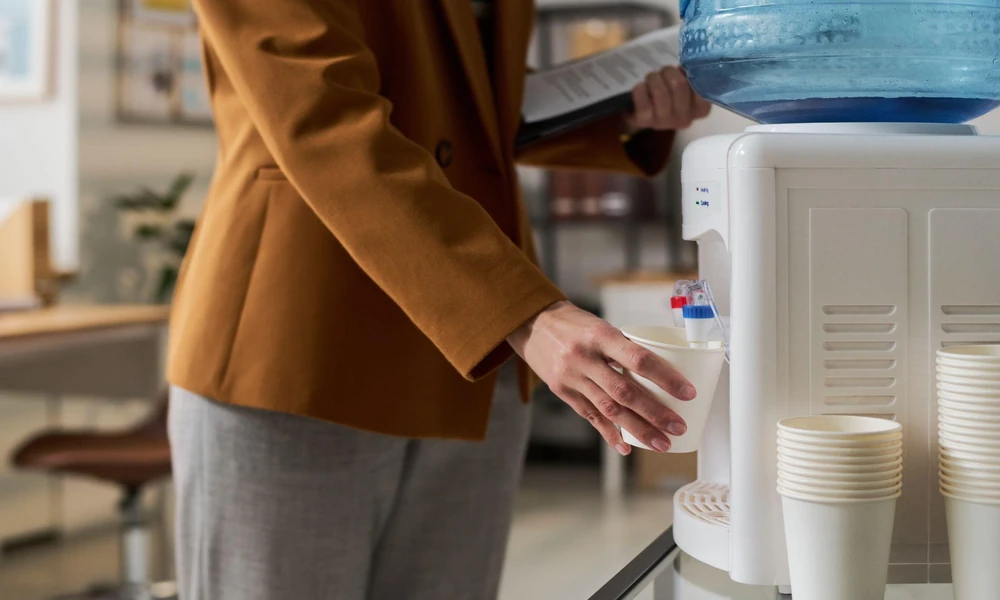

Providing drinking water at work may seem straightforward until an office starts dealing with bottled-water deliveries, storage limits, changing employee numbers, or concerns about water taste. These practical issues can make the way an office supplies drinking water increasingly important as the workplace grows.
A reverse osmosis water system offers an alternative by filtering water at the point of use rather than relying on recurring bottled supplies. When paired with a suitable office water dispenser, the system can provide employees with convenient access to filtered water throughout the working day. Here are four reasons offices may consider making the switch.
1. How Does a Reverse Osmosis Water System Improve Office Drinking Water?
Reverse osmosis filtration passes water through a specialised membrane that removes many dissolved substances and impurities. Additional filtration stages may also target sediment, chlorine, and substances that affect taste or odour.
For offices, the practical benefit lies in providing a consistent source of filtered water without requiring employees to depend on individual bottled drinks. A reverse osmosis water system can support workplaces where employees regularly refill cups or reusable bottles throughout the day.
Water quality also affects how willing employees are to use a shared drinking facility. If water has an unpleasant taste or smell, staff may choose packaged drinks instead. Installing an office water dispenser with effective filtration can make the workplace water supply more appealing and convenient for everyday use.
2. Can an Office Water Dispenser Reduce Dependence on Bottled Water?
Traditional bottled-water arrangements require more than simply ordering replacement bottles. Offices must consider delivery frequency, available storage space, bottle handling, and disposal or collection.
A plumbed-in reverse osmosis system changes this process because it draws from the existing water supply and filters water when employees need it.
Consider how the two approaches differ:
| Workplace Consideration | Bottled Water Supply | Reverse Osmosis System |
| Replacement stock | Requires regular deliveries | No drinking-water bottles to restock |
| Storage | Space needed for spare bottles | Mainly requires dispenser space |
| Handling | Bottles must be moved and replaced | Water feeds directly into the system |
| Supply planning | Usage must be estimated | Water remains available on demand |
For offices with limited pantry or storage space, reducing the number of water bottles kept on-site can make day-to-day operations easier. It can also reduce the disruption caused when stock runs low unexpectedly.
3. Why Is Point-of-Use Water Convenient for Busy Offices?
A workplace water supply needs to remain accessible during meetings, lunch periods, and busy working hours. Employees should not have to wait for replacement bottles or leave the office simply to purchase drinking water.
An office water dispenser connected directly to the water supply can provide filtered water whenever staff need it. Depending on the model selected, offices may also gain access to different water temperatures from a single unit.
This arrangement can be particularly useful for workplaces that need water for several everyday purposes, including:
- Filling personal reusable bottles
- Preparing tea or coffee
- Providing water during meetings
- Serving visitors and clients
The benefit becomes more noticeable as staff numbers increase. Rather than managing separate water supplies for different parts of the working day, the office can establish one central hydration point that employees can use as needed.
4. Is a Reverse Osmosis Water System Suitable for Growing Offices?
Office needs rarely remain fixed. A small team may use relatively little drinking water, while a growing workforce can increase demand considerably. Frequent bottled-water orders may then become harder to predict and manage.
A reverse osmosis water system can support this growth because employees draw filtered water directly from the connected supply. Offices do not need to increase stored bottle quantities every time headcount rises.
Before selecting a system, businesses should still consider factors such as expected daily usage, available installation space, required water temperatures, maintenance arrangements, and dispenser capacity. Choosing an office water dispenser based on actual workplace demand helps prevent queues and ensures the system can accommodate normal peak periods.
The installation location also matters. Placing the dispenser in an accessible pantry, common area, or staff break space can encourage regular use without disrupting workstations or meeting areas.
Frequently Asked Questions
What Does a Reverse Osmosis Water System Remove?
Reverse osmosis systems use a membrane to reduce many dissolved impurities in water. The exact filtration capability depends on the system and the additional filter stages included, so businesses should review product specifications before installation.
Does an Office Water Dispenser Need to Be Connected to a Water Supply?
Many point-of-use dispensers require a direct water connection. This allows the unit to filter incoming water continuously without relying on replaceable drinking-water bottles.
How Often Does a Reverse Osmosis System Need Maintenance?
Maintenance schedules vary according to the system, water usage, filter type, and manufacturer recommendations. Filters and other components require periodic servicing to maintain performance.
What Should an Office Consider Before Choosing a Water Dispenser?
Consider employee numbers, typical water consumption, available pantry space, preferred water temperatures, installation requirements, and ongoing maintenance. These factors can help determine which dispenser capacity and filtration system best suit the workplace.
Contact Pure Water Dispensers to discuss a reverse osmosis water system and office water dispenser configuration that suits your workplace size, usage requirements, and available space.
