
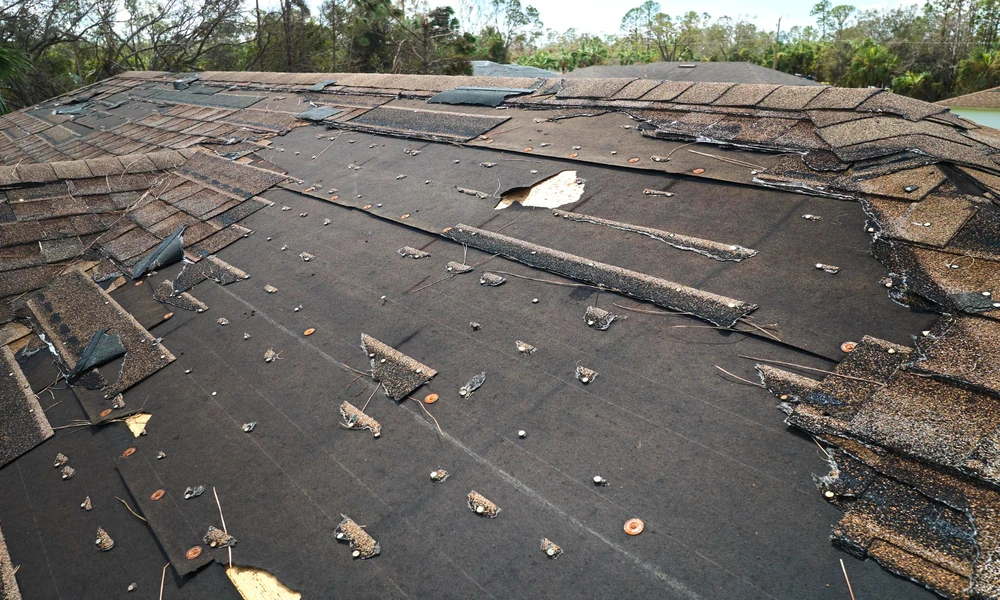

Every roof has one job before any other: getting water off the surface and away from the building. A pitched shingle roof does it with gravity, sending rain down overlapping courses and into the gutters within seconds. A flat roof, which is really a low slope roof, cannot rely on speed. It works as a sealed membrane that holds water briefly and steers it toward drains, scuppers, or gutters along a gentle built in pitch. That single difference in how water leaves the roof shapes almost every other decision, from what you spend up front to how the roof behaves after a hailstorm.
In the St. Louis area the question gets sharper. Spring and early summer bring severe thunderstorms with hail and damaging wind, and winters swing across the freezing mark often enough that water trapped in a crack or seam can freeze, expand, and widen the opening. Many older brick flats and row houses in the city carry low slope roofs tucked behind parapet walls, while most suburban homes wear pitched shingle roofs. Plenty of properties have both, such as a shingle main roof over a flat porch, rear addition, or garage.
So the useful question is not which roof type wins in general. It is which pressures weigh most on your building, and whether the roof you have now needs a targeted repair or a full replacement. Four considerations tend to pull hardest, and they often pull in opposite directions.
When you want those factors weighed on your actual roof, 314 Roofing works on both flat roofing and shingle roofing across the St. Louis area, which makes it easier to judge each section of a mixed roof on its own merits. The team also handles commercial roofing for small buildings and storefronts, and a roof inspection is the simplest place to begin. Request a roof inspection to get a clear read on what your roof needs before the next storm season arrives.
The Trade-off Map at a Glance
| Consideration | What it affects | How it plays out |
|---|---|---|
| Upfront cost versus lifecycle cost | Budget now and maintenance spending later | Staying with the existing roof type is usually simplest; a flat roof’s long run cost depends heavily on drainage and membrane upkeep |
| Drainage and ponding | Membrane life, leaks, and deck condition | Pitched roofs shed water fast; low slope roofs need clear outlets and true slope or water lingers and ages the surface |
| Repair versus replacement | Timing, cost, and disruption | Isolated damage favors repair; widespread wear, soft decking, or recurring leaks favor replacement |
| Weather exposure | Resistance to hail, wind, and freeze and thaw | Hail bruises shingles and punctures membranes; freezing water widens any opening, especially where water sits |
Upfront Cost Versus Lifecycle Cost
The upfront picture: For a house already framed with a pitched roof, staying with asphalt shingles is usually the most direct path. Crews know the system well, materials are easy to source, and small sections can be patched without much fuss.
The lifecycle picture: A flat roof’s real cost shows up over time. Seams, parapet flashing, and drain outlets all need periodic attention. A well drained membrane that gets inspected regularly can hold its value for years, while a poorly drained one can turn into a cycle of patches.
Where it tips: You rarely choose freely. The existing structure largely decides the roof type, and converting a low slope roof to a pitched one means new framing. For most owners, the cost decision is really about material choice within a roof type and a realistic maintenance plan.
Shedding Water Versus Holding It
How pitched roofs handle it: Overlapping shingles move water downhill before it can work underneath. The weak points are valleys, flashing around chimneys and walls, and eaves where ice can build during cold snaps.
How low slope roofs cope: The roofing industry generally treats water still sitting on a roof about 48 hours after rain as ponding, and model building codes call for at least a quarter inch of slope per foot on new low slope roofs. Ponded water speeds up membrane aging, adds weight to the deck, and finds any tired seam.
Where it tips: If a flat section has clogged scuppers or a sagging deck, drainage has to be corrected first. Laying a new membrane over the same bad slope simply repeats the problem. During replacement, tapered insulation can build in the slope the original roof lacked.
Patch It Or Start Over
When repair is enough: A few missing or creased shingles after a windstorm, one failed flashing detail, or a small puncture in an otherwise sound membrane can usually be fixed in place.
When replacement makes more sense: Granule loss across whole slopes, widespread curling, soft spots in the deck, leaks that keep appearing in new places, or a flat roof covered in old patches with persistent ponding all point toward starting over. Building codes also limit how many layers can stack on a roof, so an older roof may not qualify for another overlay.
Mixed roofs: You can replace a failing flat section while repairing a healthy shingle roof, or the reverse. Pay close attention to where the two systems meet, since that transition flashing is a common leak point and is often worth redoing alongside either job.
Hail, Wind, And Freeze And Thaw
Hail: NOAA’s National Severe Storms Laboratory notes that hail can cause billions of dollars of damage to structures, crops and livestock, and roofs are usually the first part of a house to absorb it. On shingles, hail bruises the mat and knocks off protective granules. On a membrane, it can puncture the surface or crush the insulation beneath, which is harder to spot from the ground.
Wind: Strong gusts lift shingle tabs and break their seal strips, leaving them ready to tear off in the next storm. On flat roofs, wind tends to work at perimeter edges and parapet terminations where the membrane is fastened.
Freeze and thaw: Any water that gets into a bruised shingle or an open seam can freeze, expand, and enlarge the gap. Low slope roofs face more of this risk because water sits longer, while pitched roofs are more exposed to ice building at the eaves.
Letting Storm Timing Shape The Choice
After a spring hail event: Get the roof inspected while damage is fresh and easy to document. Small bruises and splits left alone through summer can become active leaks once winter freezing starts. If you file an insurance claim, coverage depends on your specific policy, so treat any inspection as information rather than a promised outcome.
Heading into late fall: If replacement is clearly due, aim to finish before steady cold sets in. Shingle seal strips need warmth to bond properly, and many membrane adhesives and coatings have temperature limits during installation.
Midwinter emergencies: A leak in January usually calls for temporary protection first, with the permanent repair or replacement scheduled for milder weather when materials can be installed as intended.
Seen together, these pressures rarely point to one universal answer. A pitched shingle roof earns its place by moving water off quickly, while a flat roof can perform just as well when its drainage is honest and its seams are watched. The deciding factor on most St. Louis buildings is how water currently leaves your roof, how recent storms have treated it, and whether the damage is contained or spreading. Answer those three questions on your own building, and the choice between repair, replacement, flat, or pitched tends to make itself.
