
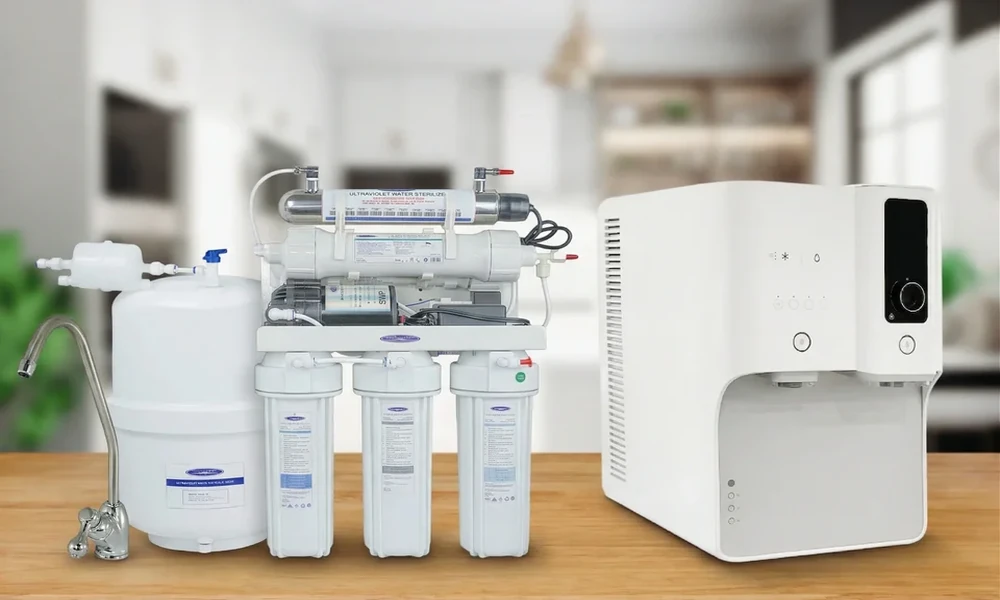

For households looking to improve their drinking water quality, two purification methods dominate the conversation: reverse osmosis filtration and water distillation. Both produce significantly cleaner water than the tap water most homes receive, but they achieve this through fundamentally different processes – and the differences matter when choosing a long-term solution for your home.
How Reverse Osmosis Works
Reverse osmosis forces water under pressure through a semi-permeable membrane with pores small enough to block dissolved salts, heavy metals, bacteria, and most chemical contaminants. The system typically includes pre-filters to protect the membrane and a post-filter to polish the final output. The result is water with the vast majority of dissolved solids removed, typically retaining only trace minerals that pass through the membrane.
How Distillation Works
Water distillation heats water to boiling point, collects the steam, and condenses it back into liquid form in a separate chamber. Because contaminants have higher boiling points than water, they are left behind in the original chamber. The condensed water is extremely pure – essentially mineral-free – but the process is energy-intensive and slow compared to membrane filtration.
Comparing Output Quality
Both methods produce high-purity water, but with subtle differences. Understanding the specific comparison between reverse osmosis vs distilled water reveals that RO water typically retains slightly more trace minerals, which some consider beneficial for flavour and mineral intake. Distilled water is mineralfree, which suits specific applications like steam irons, humidifiers, and laboratory use where mineral deposits are problematic.
Practical Considerations for Home Use
For everyday drinking water, reverse osmosis systems are generally more practical for home installation. They connect directly to the cold water supply and deliver filtered water on demand through a dedicated tap. Distillation units are standalone appliances that produce water in batches – typically one to four litres at a time – which is less convenient for a family’s daily water needs.Modern water purification appliances from specialists like Ciarra One incorporate multi-stage filtration technologies that deliver consistently high water quality in formats designed for practical home use.
Cost and Maintenance
Reverse osmosis systems require periodic membrane and filter replacement – typically annually or biannually depending on water quality and usage volume. The ongoing cost is moderate and predictable. Distillation units have lower maintenance requirements but higher running costs due to energy consumption. For most households, an RO system represents the better balance of performance, convenience, and long-term cost.
