

Understanding Common Garage Flooring Problems
Garage floors experience regular wear from vehicle traffic, stored equipment, dropped tools, moisture, and temperature changes. Over time, untreated concrete may develop cracks, stains, surface dust, or areas where the finish begins to deteriorate. Before selecting a replacement surface, homeowners should identify these problems and consider how the garage is used each day. Epoxy flooring for garage spaces is one option worth evaluating because it can create a durable, coated surface when the underlying concrete is suitable and preparation is completed correctly.
Assessing the Condition of Existing Concrete
The condition of the existing slab plays an important role in determining which flooring system will work well. Homeowners should check for visible cracks, uneven sections, loose concrete, oil contamination, and signs of moisture. Small surface imperfections may be repairable, but significant structural damage may require professional assessment before a coating is installed.
Moisture deserves particular attention because water vapor moving through concrete can interfere with coating adhesion. Previous sealers, paint, and chemical residues may also affect how well a new finish bonds. Evaluating these conditions beforehand helps establish whether repairs, cleaning, moisture testing, or additional preparation will be necessary.
Comparing Garage Flooring Materials and Coatings
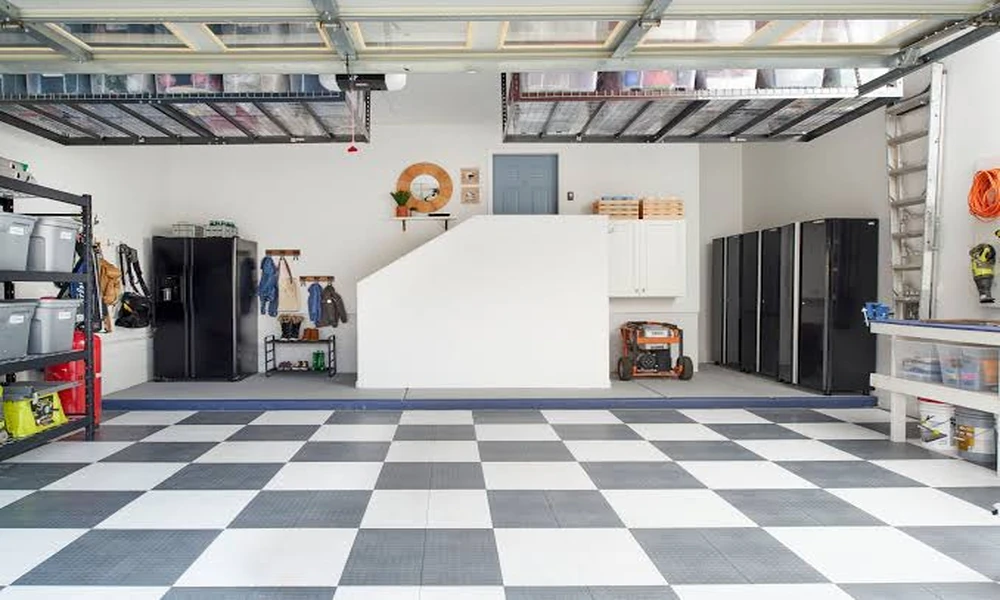
Several flooring options are available for residential garages. Bare concrete is straightforward to maintain, although it can absorb stains and generate dust. Interlocking tiles offer different colors and patterns and may allow individual sections to be replaced when damaged. Rubber mats can provide cushioning in selected work areas, but their suitability depends on vehicle traffic, moisture, and the intended use.
Concrete coatings provide another approach. Epoxy systems form a hard surface when properly applied and cured, while other coating products may offer different installation requirements and performance characteristics. Homeowners should compare product specifications, expected maintenance, curing time, and compatibility with the existing slab instead of choosing a material based on appearance alone.
Evaluating Durability, Maintenance, and Appearance
Durability depends on the coating system, concrete condition, installation quality, and level of daily use. Garages that accommodate heavy vehicles, workshop equipment, or frequent movement may require different performance characteristics from spaces used mainly for household storage.
Maintenance requirements should also influence the decision. A coated surface may simplify routine cleaning, but abrasive materials, harsh chemicals, and dragging heavy objects can damage some finishes. Homeowners should follow the manufacturer’s cleaning recommendations.
Appearance is another consideration. Solid colors, decorative flakes, and different gloss levels can change how the space looks. The selected finish should balance visual preferences with practical requirements, including traction when the surface is wet.
Preparing the Garage Floor for Installation
Proper preparation commonly involves removing dirt, grease, loose coatings, and other contaminants. Depending on the system, the concrete may need mechanical grinding, crack repairs, or moisture testing. Installation should follow the product manufacturer’s requirements for temperature, humidity, and curing conditions.
Maintaining the Finished Surface Over Time
Routine sweeping and cleaning help prevent accumulated grit from scratching the finish. Spills should be addressed promptly, and furniture or equipment should be moved carefully. Periodic inspections can identify chips, peeling, or other damage before affected areas deteriorate further. Following appropriate maintenance guidance helps preserve the floor’s appearance and usability over time.
