

Pests can turn a comfortable home into a stressful place surprisingly quickly. Ants may appear around the kitchen, cockroaches can hide in dark corners, mosquitoes can gather around standing water, and rodents may find their way indoors through tiny gaps. The good news is that effective pest control does not always require complicated treatments or expensive services.
A few simple habits can make your home much less attractive to common household pests. The key is to remove the things pests need most – food, water, shelter, and easy access.
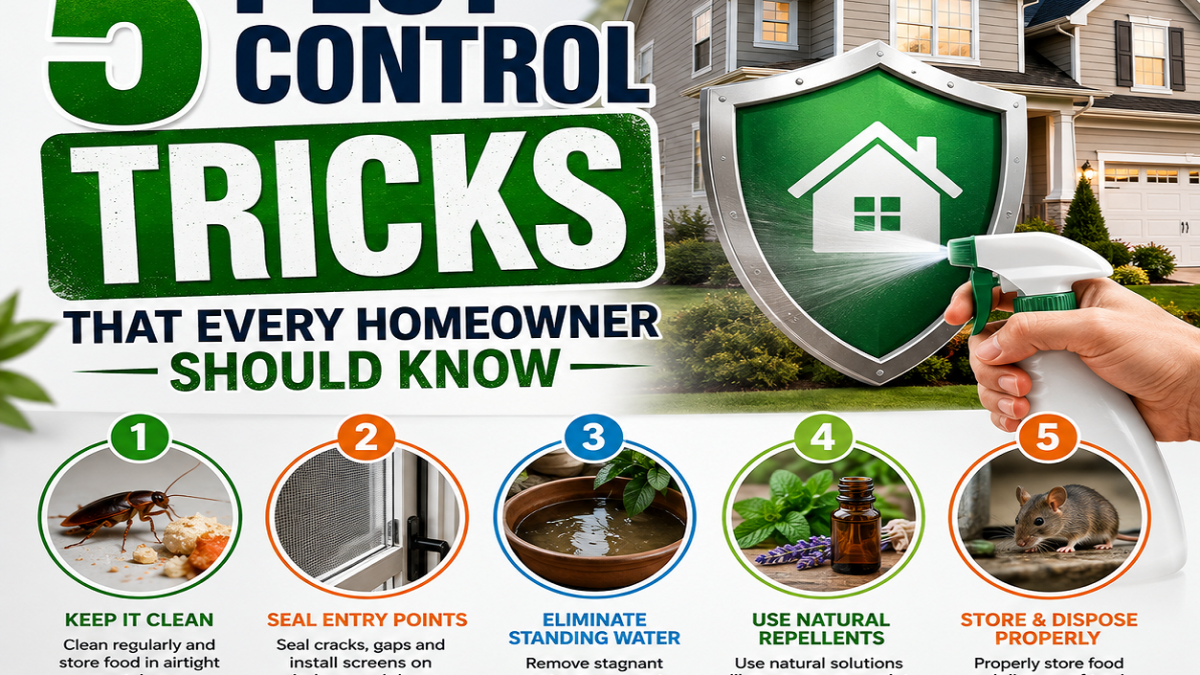
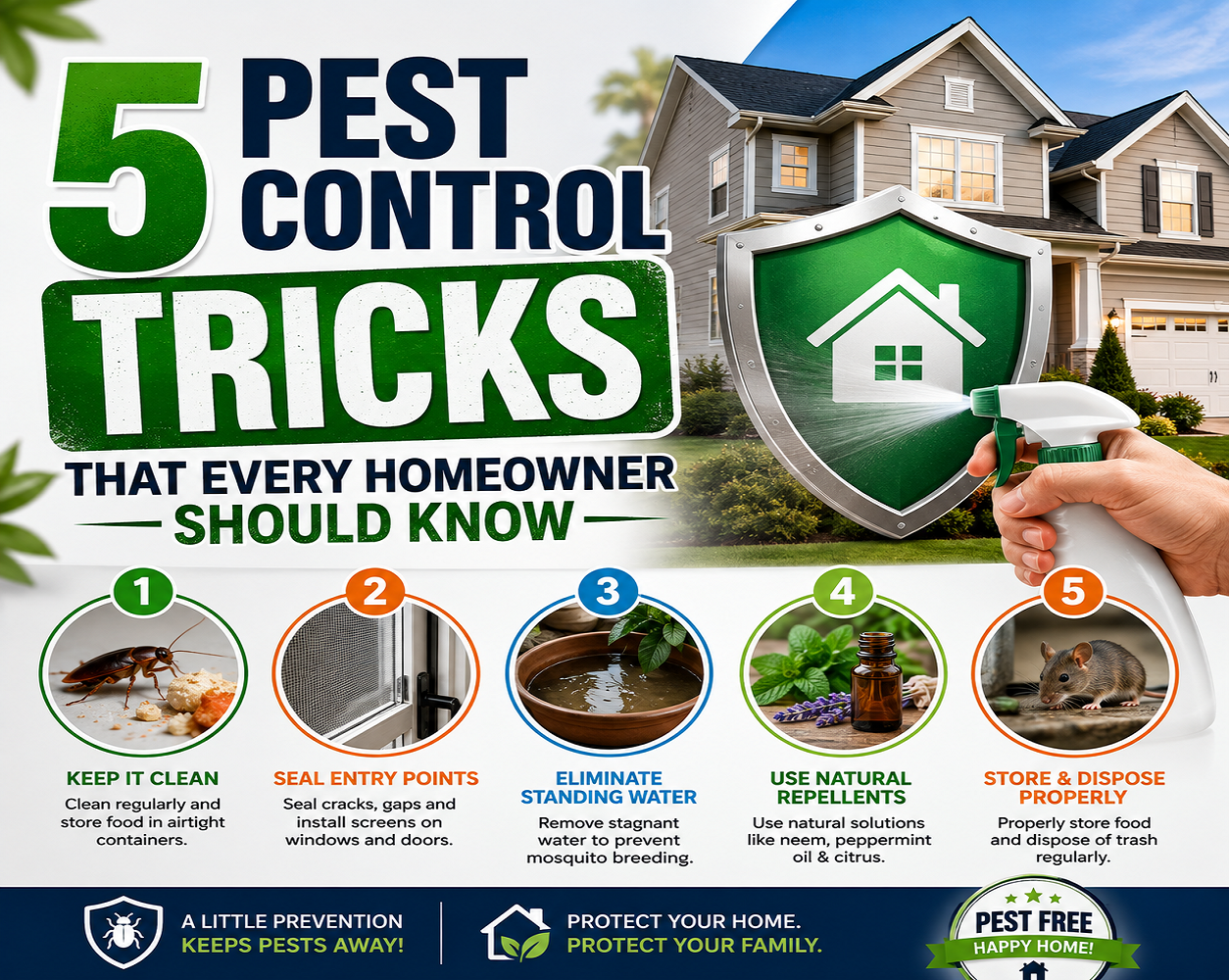
In this guide, you will learn five practical pest control tricks that every homeowner should know. These methods focus on prevention, early detection, and safe action. You will also learn how to identify common pest entry points, why moisture can become a problem, how regular cleaning helps, and when a pest problem requires professional help.
Whether you are dealing with ants, cockroaches, mosquitoes, rodents, or other unwanted insects, these pest control tips can help you protect your home and reduce the chances of an infestation.
1. Seal Cracks and Pest Entry Points
One of the simplest pest control tricks is also one of the most effective. If pests can enter your home easily, they will eventually find a way inside.
Many household pests do not need a large opening. Ants can pass through very small cracks, while mice can squeeze through narrow gaps. Cockroaches can enter through spaces around pipes, drains, doors, and windows.
Start by inspecting the outside of your home. Look around window frames, door frames, utility pipes, vents, the foundation, and areas where cables enter the building.
Pay special attention to these common pest entry points
- Cracks around windows and doors
- Gaps beneath exterior doors
- Openings around plumbing pipes
- Cracks in walls and foundations
- Damaged window screens
- Gaps around vents
- Spaces around air-conditioning lines
- Holes near electrical cables
Use suitable caulk to seal small cracks around windows, walls, and other fixed areas. Larger openings may require a stronger repair material. A door sweep can also help close the gap beneath an exterior door.
Check Your Home From the Outside
Walk around your property during daylight and look for places where the inside of your home connects directly to the outdoors.
Trees and shrubs touching walls can also provide pests with an easy route toward windows and roofs. Keep plants trimmed and avoid allowing dense vegetation to sit directly against the building.
For rodents, inspect low areas around garages, storage spaces, sheds, and foundations. Look for gnaw marks, droppings, nesting material, or greasy marks along walls.
Sealing entry points does more than stop pests today. It reduces the number of opportunities they have to enter tomorrow.
2. Remove Food and Water Sources
Pests need food and water to survive. If your home provides both, it can become an attractive place for them to stay.
Good pest control starts with making your home less inviting.
Crumbs on countertops, food left uncovered, overflowing trash cans, pet food left out overnight, and dirty dishes can all attract insects. Even a small amount of food can be enough for ants or cockroaches.
Keep food in sealed containers whenever possible. Clean kitchen surfaces regularly, sweep floors, and wipe up spills as soon as they happen.
Do not forget about less obvious food sources. Grease and food particles can collect behind appliances, beneath cabinets, and around kitchen drains.
Keep the Kitchen Clean
The kitchen deserves extra attention because it combines food, water, warmth, and hiding places.
Make these habits part of your regular routine
- Wipe counters after preparing food
- Clean spills immediately
- Store dry food in sealed containers
- Wash dishes instead of leaving them overnight
- Empty kitchen trash regularly
- Clean crumbs from floors and corners
- Wipe food residue from appliances
- Keep pet food containers closed
Water matters just as much as food. Fix leaking faucets, pipes, and appliances. Do not allow water to sit beneath sinks or around refrigerators.
If you have indoor plants, avoid overwatering them. Moist soil can attract fungus gnats and other small insects.
A dry, clean home gives many common pests fewer reasons to stay.
3. Reduce Moisture Around Your Home
Moisture is one of the most overlooked parts of pest control. Many pests prefer damp environments because they provide water and favorable conditions for hiding and reproduction.
Bathrooms, kitchens, basements, garages, laundry areas, and poorly ventilated storage rooms deserve special attention.
Check under sinks for leaks. Inspect washing machine connections and water heaters. Look for condensation around pipes and signs of water damage on walls or ceilings.
Outside your home, make sure rainwater drains away from the foundation. Clean clogged gutters and avoid leaving containers filled with water in the yard.
Stop Standing Water
Standing water can become a breeding area for mosquitoes. Even small containers can collect enough water to create a problem.
Check places such as
- Plant saucers
- Buckets
- Old tires
- Bird baths
- Outdoor toys
- Drainage areas
- Uncovered containers
- Clogged gutters
Empty these containers regularly and improve drainage where water collects.
Ventilation also matters. Bathrooms should have enough airflow to dry after showers, while damp storage areas may need better ventilation or a dehumidifier.
If you repeatedly find mold, damp walls, or persistent moisture, solve the underlying water problem rather than treating insects alone.
Good pest control often begins with good moisture control.
4. Keep Your Yard and Storage Areas Tidy
Your home’s exterior can influence what happens inside. Overgrown plants, piles of leaves, stacked wood, and clutter near walls can give pests shelter.
Rodents, spiders, ants, termites, and other pests can use outdoor hiding places before moving closer to your home.
Keep grass and plants maintained. Trim branches that touch the roof or exterior walls. Remove piles of leaves and other organic debris from areas next to the house.
Firewood should be stored away from the home and raised off the ground when possible. Avoid creating dark, damp spaces directly against exterior walls.
Declutter Indoor Storage Areas
Pests love undisturbed spaces. Cardboard boxes, old newspapers, unused furniture, and cluttered storage rooms can provide excellent hiding places.
Organize storage areas so you can easily inspect corners and walls. Use sealed plastic containers for items that need long-term storage.
Garages deserve attention too. Keep food, animal feed, and gardening supplies properly contained. Clean up spills and remove unnecessary clutter.
A tidy property makes pest control easier because you can spot signs of activity before a small problem becomes an infestation.
5. Act Quickly When You See Signs of Pests
Seeing one pest does not always mean you have a serious infestation. However, ignoring repeated signs can allow the problem to grow.
Early detection is one of the most useful pest control habits a homeowner can develop.
Look for signs such as droppings, damaged food packaging, unusual odors, nests, shed insect skins, grease marks, holes, dead insects, or repeated sightings in the same area.
Ant trails are another useful warning sign. If you see ants walking along the same path repeatedly, they may have established a route between a food source and their nest.
Cockroaches may hide during the day, so repeated sightings at night can be worth investigating.
Rodent activity can include small droppings, scratching sounds, gnaw marks, or damaged food containers.
Do Not Ignore Repeated Pest Activity
A common mistake is to treat the visible pest without looking for the reason it appeared.
For example, spraying ants may remove the insects you can see, but if food remains accessible and an entry point stays open, more ants may arrive.
The same principle applies to mosquitoes, rodents, and cockroaches. Look for the conditions attracting them.
If you repeatedly notice pests despite cleaning, sealing gaps, and removing food or water sources, the problem may require a more thorough inspection.
What Is the Best Pest Control Method for a Home?
The best pest control method depends on the type of pest and the reason it is entering your home.
For many common household pests, prevention should come first. Seal entry points, remove food and water sources, reduce moisture, and keep indoor and outdoor areas clean.
If these measures do not solve the problem, identify the pest before choosing a treatment. Different pests require different approaches.
Avoid using large amounts of insecticide simply because you are unsure what you are dealing with. More product does not necessarily mean better results, and improper use can create unnecessary risks for people and pets.
Read product labels carefully and follow their instructions if you use a household pest treatment.
How Can You Prevent Pests From Coming Back?
Preventing pests from returning requires consistency. A one-time cleaning may help, but regular maintenance is more effective.
Create a simple monthly inspection routine. Check windows, doors, plumbing areas, storage spaces, kitchens, garages, and the exterior of your property.
Pay attention to seasonal changes too. Warm and wet weather can increase insect activity, while changes in temperature can encourage some rodents to seek shelter indoors.
A useful prevention routine includes
- Inspecting cracks and gaps
- Checking for plumbing leaks
- Cleaning kitchen areas
- Emptying standing water
- Checking window screens
- Inspecting storage areas
- Trimming vegetation near the house
- Looking for droppings or other pest signs
These small tasks can help you catch problems before they become expensive or difficult to manage.
When Should You Call a Pest Control Professional?
Some pest problems are manageable with basic prevention, but others require professional attention.
Consider contacting a pest control professional if you notice repeated pest activity, extensive property damage, large numbers of insects, a suspected termite problem, or signs of rodents inside walls or ceilings.
Professional help can also be useful when you cannot identify the pest or when previous treatments have failed.
If you live in Vaughan and need help with a persistent infestation, professional Pest control in Vaughan can help identify the source of the problem and determine an appropriate treatment approach.
Saniiq provides pest control services in Vaughan for homeowners who need professional assistance with unwanted pests. Getting the problem assessed early can make it easier to address the cause rather than repeatedly treating only the pests you can see.
Do not wait indefinitely if the problem continues. Some pests can damage property, contaminate food, or create difficult conditions inside a home.
The goal is not simply to kill the pests you can see. The goal is to find and address the conditions that allow them to survive.
Common Pest Control Mistakes Homeowners Make
Even homeowners who clean regularly can accidentally create conditions that attract pests.
One common mistake is leaving pet food available for long periods. Another is ignoring small plumbing leaks because they seem harmless.
Using too much pesticide is another problem. More chemicals do not automatically provide better pest control.
Some homeowners also focus entirely on the inside of the house while ignoring the yard, garage, roofline, or foundation.
Another mistake is waiting until pest activity becomes severe before taking action.
Instead, treat pest control as regular home maintenance. Small repairs and cleaning habits can be much easier than dealing with a large infestation later.
Frequently Asked Questions About Pest Control
What are the most effective pest control tricks for homeowners?
The most useful pest control tricks include sealing entry points, removing food and water sources, controlling moisture, keeping outdoor areas tidy, and responding quickly to signs of pest activity.
How do I keep ants out of my house?
Keep food sealed, clean crumbs and spills, repair moisture problems, and seal cracks around windows, doors, walls, and pipes. If ants keep returning, look for the entry point and possible nest location.
How can I prevent cockroaches in my kitchen?
Keep food sealed, clean grease and crumbs, repair leaks, empty trash regularly, and reduce clutter. Seal gaps around pipes and cabinets where cockroaches may enter or hide.
What attracts mosquitoes around a home?
Standing water is a major attraction because mosquitoes can use stagnant water for breeding. Empty containers, clean gutters, improve drainage, and regularly check outdoor areas for collected water.
How can I tell if I have rodents?
Common signs include droppings, gnaw marks, scratching noises, damaged food packaging, nesting material, and unusual smells. Repeated signs usually deserve further inspection.
Does keeping a house clean prevent pests?
Cleanliness can reduce many food and water sources that attract pests, but it does not guarantee a pest-free home. Entry points, moisture, outdoor conditions, and structural gaps also matter.
How often should I check my home for pests?
A basic inspection once a month is a useful habit. Check kitchens, bathrooms, storage areas, garages, windows, doors, plumbing areas, and the outside of the property.
Should I handle a pest infestation myself?
Small problems may be manageable with prevention and appropriate household products. Persistent, extensive, or difficult-to-identify infestations are better handled with professional help.
Final Thoughts
Effective pest control starts with simple habits. Seal the gaps pests use to enter, remove food and water sources, control moisture, keep your yard and storage areas tidy, and investigate signs of activity early.
You do not need to wait for a serious infestation before taking action. Regular inspections and basic home maintenance can make your property less attractive to common pests and help you spot problems sooner.
Start with one area today. Check your doors and windows for gaps, inspect under your sinks for leaks, clean food storage areas, and look around your property for standing water. Small changes can make a meaningful difference in keeping unwanted pests out of your home.
