
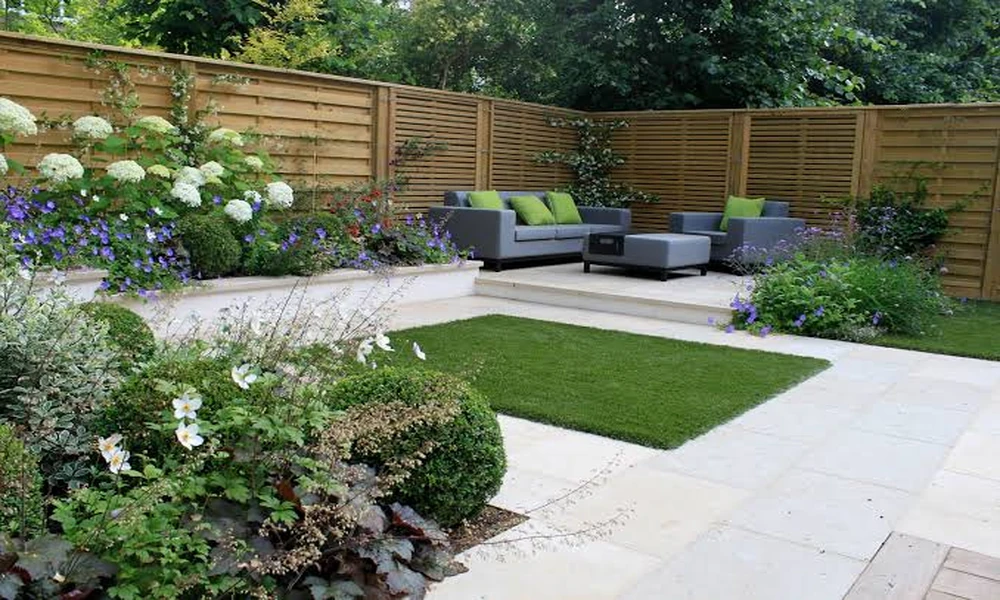

A green, mud-free backyard looks great in listing photos. It also hides almost everything a buyer needs to know. Photos can’t show you what’s in the infill, whether the yard drains, or how the turf smells at 3 p.m. in July.
That doesn’t make artificial turf a red flag. A well-installed, well-kept system can be a real selling point. But it’s a major outdoor feature with a limited lifespan, so it deserves the same questions you’d ask about a roof or an HVAC unit.
Here’s what to check while you still have time to act. Your general home inspector may not cover turf at all, so ask early.
1. Find out how old it is and who installed it
Start with the paperwork. Ask the seller for the installation date, the installer’s name, the turf product, and the original invoice.
Age matters because estimates vary widely. Synthetic Grass Warehouse, a supplier, says a quality professional installation can typically last 15 to 25 years. New Jersey officials put synthetic sports fields at about 10 to 12 years. A backyard could land anywhere in that range, depending on product, sun, traffic, and care. If nobody can tell you the age or installer, price in more uncertainty.
2. Read the warranty, and check whether it transfers
Don’t assume a warranty comes with the house. Some are written for the original purchaser, so a new owner may not be covered.
Check the fine print while you’re there. Coverage varies a lot, even within one company. One installer’s published terms offer 15 years on most products but 3 years on its pet collection, and they say a failure to maintain the turf may void coverage. Ask the seller for cleaning receipts or service records if a warranty matters to your decision.
3. Do the smell test at the right time
A morning showing tells you very little. Odor from pet urine gets stronger with heat, so ask to see the yard on a warm afternoon. Visiting after rain helps too, because moisture can bring old urine odor back.
Get close to the surface. Crouch down in the corners and along fences, where dogs tend to go. If the seller has dogs and the yard has a strong smell, assume residue has reached the infill. A surface rinse before your showing won’t have changed that.
4. Test the drainage yourself
This takes a bucket of water and about five minutes. Pour it slowly over a few different areas and watch what happens. Water should disappear into the turf rather than sit on it or run sideways toward the house.
Ask the seller whether water stands after storms. If you can, visit after a good rain and look for damp patches. Pay special attention to anywhere the yard slopes toward the foundation. Clay soil adds a wrinkle here. The Houston Black clays of the Blackland Prairie shrink and swell markedly with moisture, and they take in water very slowly once wet. If the turf drains slowly, the fix may sit well below the part you can see.
5. Walk the surface and look for movement
Walk the whole yard slowly, including the side yards. You’re looking for:
- Dips, bumps, or soft spots, which can point to a base problem
- Ripples or wrinkles in the turf
- Lines where seams are visible or pulling apart
- Edges lifting at fences, paths, and planting beds
Seams and edges can often be repaired by an installer. Widespread dips are a bigger concern, since fixing them can mean pulling up the turf to rebuild the base.
6. Part the fibers and check the infill
Push the blades apart with your fingers in several places, including high-traffic paths and quiet corners. You should see infill spread evenly around the base of the fibers.
If you can see bare backing, infill has moved or worn away. Blades that stay flat and look shiny may be coated in grime, or they may simply be worn. Dark, crusty, or compacted infill suggests the yard hasn’t been maintained for a while. Infill problems are usually fixable, but they tell you something about how the yard has been treated.
7. Confirm the HOA is fine with it
Don’t assume that existing turf is approved, or that state water-conservation law protects it. Texas Property Code Section 202.007 protects drought-resistant landscaping and water-conserving natural turf. The word “natural” matters. A 2013 local report on the law noted that artificial turf could still be prohibited.
Rules vary by community. One Fort Bend County association’s 2026 guidelines ban artificial grass in front yards, along with side yards visible from the street. In master-planned neighborhoods from Leander to the Hill Country, get the HOA’s written rules and confirm the installation was approved. Your agent or a real estate attorney can help with the details, and laws can change, so verify the current version before relying on it.
8. Budget for a reset
Even a good yard benefits from a fresh start under new ownership. You don’t know what’s in the infill, what products were used, or how long it has been since a deep clean.
The cost is usually modest compared with replacing the turf. As a guide, turf cleaning cost depends on size, odor, infill condition, and drainage. Our own published rates run from $0.45 to $0.85 per square foot, or roughly $450 to $850 for a 1,000-square-foot yard. Small areas may carry a minimum, and other providers will price differently.
What to do with what you find
Most issues fall into one of three groups.
| What you found | What it usually means | Possible next step |
|---|---|---|
| Odor, flat fibers, dirty infill | Maintenance gap | Ask for a professional deep clean before closing, or budget for one |
| Loose seams, lifted edges | Repair needed | Get an installer’s quote |
| Dips, standing water, worn-through areas | Possible base or lifespan issue | Get an installer’s assessment before removal or repair is priced |
Seam work and base repairs go beyond what a cleaner can do, so get a quote from an installer for those. Then bring the numbers to your agent. A written estimate is much easier to negotiate with than a vague worry about the backyard.
A little homework now means you’ll know exactly what you’re buying, and you can enjoy the yard from day one instead of discovering its history in the first heat wave.
Buying a Home With Artificial Turf in Texas? Check These 8 Things Before You Close
