

Main Sail Pest Control fields these calls in a predictable rhythm: a guest messages a host mid-stay about bites, the host has a changeover in six hours, and nobody knows whether the problem is real or whether the bites came from mosquitoes at the water’s edge. Short-term rentals concentrate the risk because bed bugs travel in luggage, and a lakefront property in Lake Elsinore might see forty different sets of luggage in a season. Volume of turnover, not cleanliness, is what drives bed bug exposure in vacation housing.
How do I know if it’s actually bed bugs and not lake mosquitoes?
Look for physical evidence on the mattress and frame rather than trying to diagnose the bites. Bite reactions are unreliable, since some people show welts within hours and others show nothing at all for days or ever.
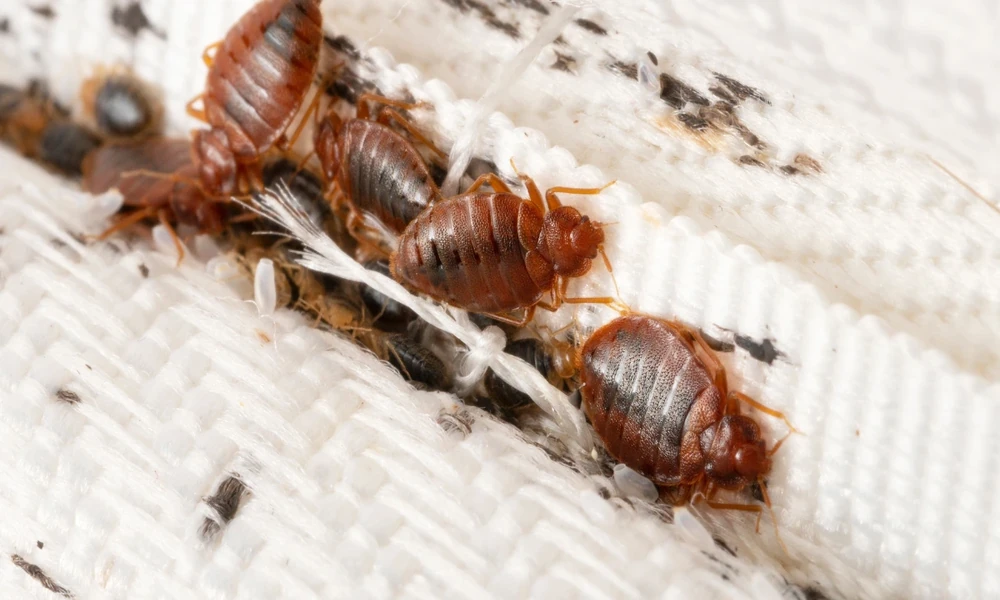
Bed bugs are reddish-brown, wingless, and about the size and shape of an apple seed when adult, roughly four to five millimeters. What you find more often than live insects:
- Dark reddish-brown spots the size of a pen dot on sheets, mattress piping, and box spring fabric, which is digested blood
- Pale amber cast skins, which are shed exoskeletons, collected in seams and screw holes
- Tiny white eggs, about one millimeter, glued into crevices
- A sweet, musty odor in heavily infested rooms
Mosquito bites tend to appear on exposed skin and show up the same night as outdoor exposure. Bed bug evidence stays in the room. If the mattress seams and headboard back are clean after a careful check, mosquitoes near the lake are the likelier answer.
Where should a host inspect during a same-day turnover?
Focus on the seven places that account for most early detections and give the inspection ten focused minutes rather than a general once-over.
- Mattress seams, piping, and tag area, all four corners first
- Box spring underside and the stapled dust cover, which is the single most common harborage in a rental
- Bed frame joints and bolt holes, especially wooden frames
- Headboard back, including a headboard mounted to the wall
- Nightstand drawer runners and the underside of the nightstand
- Upholstered chair seams and the underside of sofa cushions in the room
- Wall plates, baseboard gaps, and picture frames within about five feet of the bed
Carry a flashlight and a thin plastic card to run along seams. If evidence turns up, do not strip the bed and haul linens through the house. Bag them in the room, seal the bag, and wash on hot with a full dryer cycle, since sustained heat in a dryer is what kills all life stages.
Why does bug spray make a rental infestation worse?
Over-the-counter aerosols and total-release foggers scatter the population instead of eliminating it. Foggers push bed bugs deeper into walls, adjacent rooms, and neighboring units, and University of Kentucky entomology extension work has documented widespread pyrethroid resistance in bed bug populations, meaning the active ingredient in most consumer sprays frequently does not kill the insects it touches.
For a host, the practical damage is worse than the biology. Spraying turns a one-room problem into a multi-room problem, delays professional treatment, and adds a chemical odor a guest will notice and review.
What treatment options work, and how long does a unit stay offline?
Professional heat treatment and a structured chemical program both work. The difference for a short-term rental is downtime.
Whole-room heat treatment raises the space to a lethal temperature and holds it, with the widely used industry benchmark being sustained air temperatures around 120 to 135 degrees Fahrenheit at the harborage points for several hours. A heat job typically runs six to ten hours on site and can put a unit back in service the same day or the next, which is why hosts with booked calendars often choose it.
A conventional program uses residual products, targeted dusts in voids, and mattress and box spring encasements, and generally requires two to three visits spaced roughly two weeks apart to catch newly hatched insects. Eggs hatch in about six to ten days at room temperature, so the follow-up interval is not padding, it is biology.
Expect any credible provider to add monitoring after treatment. Interceptor cups under bed legs and periodic inspection over four to six weeks are how you confirm the job held before you take another booking.
What Main Sail Pest Control recommends building into your rental operation
Prevention in short-term rentals is a process problem, not a product problem.
Use light-colored, tight-woven mattress and box spring encasements with a zipper closure, because they eliminate the box spring as harborage and make evidence easy to see. Choose metal or hard-surface bed frames over upholstered and slatted wood. Keep luggage racks away from the bed and skip fabric-lined storage benches. Give cleaners a short written inspection checklist tied to turnover, and log what they check so you have a record if a guest raises a claim. Ask a licensed provider about periodic inspection during your high-occupancy months rather than waiting for a complaint.
Guests can protect themselves in about two minutes: keep luggage in the bathroom or on a hard surface until you have checked the mattress corners and box spring, and never put a bag on the bed.
A bed bug report in a vacation rental is a scheduling emergency, a review risk, and a treatment problem all at once, and the properties that come through it cleanly are the ones with encasements, a real inspection routine, and a provider on call. If you host in Lake Elsinore or manage a lakefront property and want an inspection, a heat treatment quote, or a turnover protocol your cleaners can actually follow, Main Sail Pest Control works with short-term rental owners across southwest Riverside County.
