
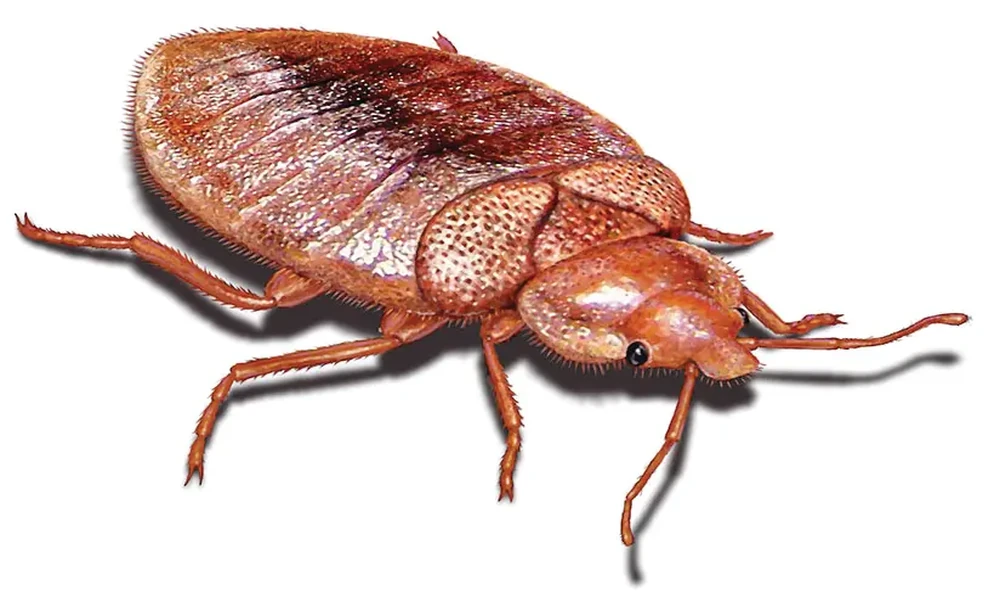

A bed bug changes size and color five times before it reaches adulthood, which is why so many people find one and decide it must be something else. An unfed hatchling is a translucent speck barely a millimeter long. A fed adult is a dark, plump oval about the size of an apple seed. Technicians running Hot Bugz heat equipment routinely find all six stages in one bed frame, and knowing what each looks like is the difference between catching an infestation in week two and discovering it in month four.
What do bed bug eggs look like?
Bed bug eggs are pearly white, roughly 1 millimeter long, and shaped like a slightly curved grain of rice. The female glues each one to a surface with a clear cement, so they do not roll or brush away easily and are usually found in clusters inside seams, screw holes, cracked wood, and the folds of a box spring.
At that size they sit near the edge of unaided vision, and on white fabric they are close to invisible. Look for them with a flashlight held at a low angle, which catches the shine of the shell. Eggs hatch in about six to ten days at normal room temperature and take longer in cool conditions. A female lays one to five eggs a day and a few hundred across her life, according to university extension entomology programs, which is how a single hitchhiking bug becomes a population.
What do baby bed bugs look like?
Newly hatched bed bugs, called first instar nymphs, are about 1.5 millimeters long and nearly colorless, so they show up as pale straw-yellow or almost see-through specks. After a blood meal the abdomen fills with bright red, which is often the only reason anyone notices them at all.
A nymph is an immature bed bug that must take a blood meal before it can molt to the next stage. There are five of these stages, and the standard size figures used in extension entomology guides run roughly:
- First instar: 1.5 mm, translucent
- Second instar: 2 mm, pale tan
- Third instar: 2.5 mm, tan with visible gut contents
- Fourth instar: 3 mm, light brown
- Fifth instar: 4.5 mm, brown and closer to adult shape
Each molt leaves behind a shed skin, an empty amber husk with the same outline as the insect. Those husks are one of the most reliable pieces of evidence in a room because they persist for months after the bug that made them has moved on.
What does an adult bed bug look like?
An adult bed bug is 4 to 5 millimeters long, reddish brown, oval, and flattened top to bottom like a lentil when it has not fed. That flat profile lets it slide into gaps as thin as a credit card, which is why they survive inside picture frames and electrical outlets.
After feeding the shape changes noticeably. The abdomen swells and lengthens, the color deepens toward mahogany, and the banded segments of the abdomen stretch apart. People sometimes report two different insects in the same room when they have actually seen one fed and one unfed adult.
Adults have short antennae with four segments, small non-functional wing pads instead of wings, and a piercing beak folded under the head. They cannot fly or jump. Anything in your bedroom that leaps or takes to the air is not a bed bug.
How do you tell a bed bug from a look-alike?
Check for hair, leg length, and movement speed. Carpet beetle larvae are bristly and covered in visible hairs. Spider beetles look rounder and shinier with noticeably long legs. Fleas are flattened side to side rather than top to bottom and jump when disturbed. Young cockroaches move much faster and have long, whip-like antennae.
Bat bugs are the genuinely difficult case. They are close relatives that look almost identical and are distinguished by the length of the fringe hairs on the pronotum, the shield behind the head, which requires magnification and usually a trained eye. Misidentification matters, because bat bugs point to a roosting colony in the attic or wall rather than a bedroom infestation.
What other evidence do they leave behind?
Dark fecal spotting is often easier to find than the insects. Digested blood dries as small black or dark brown dots roughly the size of a pen tip, and on absorbent fabric it bleeds outward like ink from a felt marker. Rusty red smears are different, usually a crushed bug or a spot of fresh blood from a disturbed feeding.
Concentrate a search on mattress piping, the underside of the box spring frame, the seam where the headboard meets the wall, and the joints of upholstered furniture. Interceptor cups placed under bed legs will catch bugs traveling to and from the bed and give you physical specimens to identify.
Why does the life stage matter when you treat?
Because eggs are the most heat-tolerant stage and set the treatment standard. Research by Kells and Goblirsch in the Journal of Economic Entomology found that 118°F (48°C) killed adult bed bugs in about 20 minutes, while eggs needed roughly 90 minutes at that temperature. Any treatment calibrated for adults alone leaves eggs to hatch six to ten days later, which is why an infestation appears to come back when it was never fully cleared.
Learn the six stages and you stop guessing. Pearly rice-grain eggs, translucent hatchlings, brown fifth instars, apple-seed adults, plus shed husks and ink-dot fecal spots all tell you the same story at different points in time. If you have found any of them, photograph the specimen and the location, then get a professional identification and a temperature-monitored assessment from a Hot Bugz operator before the population doubles.
