
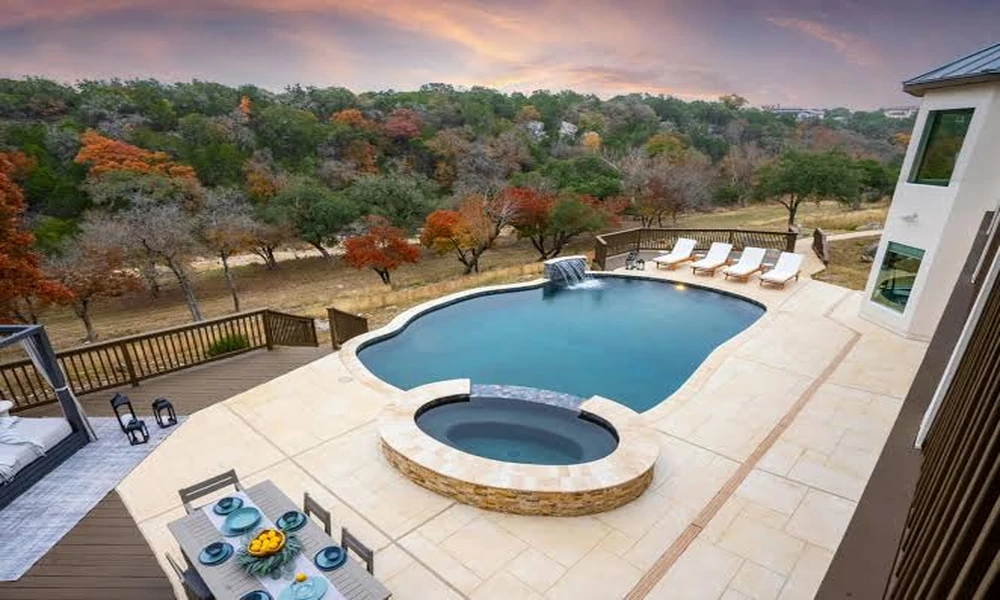

If you are planning a new outdoor living space, the first big decision is not just style. It is function. A pool deck and a backyard deck may look similar in photos, but they behave very differently underfoot. Water, sunscreen, foot traffic, bare feet, and constant sun exposure change what “good material” means. Before you commit to deck construction, it helps to think like a homeowner and like a builder at the same time. What feels safe when it is wet. What stays comfortable in heat. What holds up when chemicals and moisture show up every day.
This post breaks down the most common deck surface options and how each performs for traction, comfort, maintenance, and long-term durability, especially when the deck is next to a pool.
Start with the real difference: wet use vs dry use
A backyard deck is usually a “mostly dry” space. Even if it sees rain, it has time to dry out. People are often wearing shoes, and spills are occasional.
A pool deck is a “routinely wet” surface. People are dripping water constantly. Kids run. Adults walk barefoot. Pool chemicals splash. Sunscreen and body oils create slick spots. In other words, the deck is being asked to provide traction in conditions that naturally reduce traction.
That is why the best material for a backyard deck is not always the best choice for a pool deck, even if you like the look.
Traction 101: what makes a surface slippery?
Traction is affected by a mix of surface texture, water, and contaminants.
- Texture and profile: Deep wood grain, brushed finishes, and textured embossing usually improve grip. Smooth, glossy, or sealed surfaces often reduce it.
- Water film: Even a tiny layer of water can act like a lubricant between foot and surface.
- Oils and lotions: Sunscreen is a big one around pools. It can make “normally fine” surfaces feel unpredictable.
- Algae and mildew: Shaded or slow-drying areas can develop growth that becomes slick over time, especially if cleaning is delayed.
- Footwear and bare feet: Bare feet can grip well on some textures, but they also highlight heat and splinter risk.
For pool environments, traction is not just a preference. It is a safety requirement you will live with daily.
Key criteria to compare for pool decks vs backyard decks
When you compare materials, avoid focusing only on price per board. Use a scorecard that fits how the deck will actually be used.
- Wet traction: How it performs when wet, not just dry.
- Barefoot comfort: Heat retention and surface feel.
- Water resistance: Swelling, warping, rot, and fastener issues.
- Chemical resistance: Chlorine, saltwater systems, and cleaning products.
- Maintenance and cleanability: How easy it is to keep algae and grime from building up.
- Durability: Scratch resistance, fade resistance, and long-term stability.
- Repairability: How easy it is to swap a board or fix localized damage.
Now let’s walk through the most common material categories.
1) Pressure-treated wood: familiar, affordable, and traction-friendly, with caveats
Where it shines: Traditional backyard decks, budget-conscious projects, and situations where you want a grippier surface without specialty products.
Traction considerations: Pressure-treated wood usually offers decent traction because the surface has natural grain and micro-texture. However, traction changes over time. As boards weather, they can become smoother in high-traffic areas, and they can also get slick if algae builds up.
Pool-deck reality: Pressure-treated wood can work near pools, but you need to accept more maintenance. The board surface is more likely to show wear from water and chemicals, and it can be less forgiving if you fall behind on cleaning.
Comfort and safety notes:
- Splinters: Bare feet and splinters do not mix. Over time, wood can splinter, especially if it dries out aggressively or is not maintained.
- Heat: Wood can get hot, but it is often more tolerable than darker composites in full sun.
- Fasteners: Wet environments increase the importance of corrosion-resistant fasteners and connectors.
Maintenance: Expect regular cleaning, periodic sealing or staining (depending on your goals), and spot sanding or board replacement over the years.
Best fit: Backyard decks first. Pool decks only if you are willing to maintain it and prioritize good detailing, drainage, and hardware selection.
2) Cedar or other naturally durable woods: great feel, but still needs upkeep
Where it shines: Homeowners who like natural wood aesthetics and a softer, barefoot-friendly feel.
Traction considerations: Like pressure-treated wood, the natural grain provides reasonable grip, especially when the surface is not over-sealed. Some finishes can reduce traction, so it matters what you put on top of the wood.
Pool-deck reality: Cedar and similar woods handle moisture better than some woods, but they are not magic. A pool environment still accelerates aging. Constant wetting and drying, plus pool chemicals, can shorten the finish cycle.
Comfort and safety notes:
- Often comfortable underfoot.
- Can splinter with age.
- Can discolor or weather unevenly, especially around splash zones.
Maintenance: Similar story to pressure-treated, often with more attention to preserving appearance.
Best fit: Backyard decks and shaded lounging spaces. Pool decks can work if you accept upkeep and do not mind natural weathering.
3) Composite decking: low maintenance and consistent, but traction varies by product
“Composite” covers a wide range. Some boards are capped and engineered for stain resistance. Others are more basic. Traction performance can vary a lot between brands and board textures.
Traction considerations: Many composites have embossed grain patterns, which can help. Some also offer specific “high-traction” lines. The key is that some composites can feel slick when wet, especially if the surface texture is shallow or if the board is kept very clean and smooth. Add sunscreen, and it can get worse.
Pool-deck reality: Composite is popular around pools because it resists rot and many stains. But do not assume all composite is “pool-safe.” For a pool deck, prioritize:
- A board with pronounced texture
- A profile designed for wet traction
- A color that is not overly dark if heat is a concern
Comfort and safety notes:
- Heat: Dark composites can become uncomfortably hot in direct sun. Lighter colors generally do better.
- Barefoot feel: No splinters, which is a big advantage.
- Scratches: Some composites scratch. Pool furniture and toys can leave marks.
Maintenance: Usually cleaning and occasional deeper wash. You still need to keep it free of algae and grime in shaded areas.
Best fit: Great for many backyard decks. For pool decks, choose texture and heat performance intentionally, not just color and price.
4) PVC decking: high moisture resistance, often good for pools, still needs traction scrutiny
PVC boards are not wood-based, so they typically handle water extremely well. Many homeowners consider them for pool surrounds for that reason.
Traction considerations: Like composite, traction depends on surface texture. Some PVC boards are made with a texture that performs well when wet. Others can feel slick if the finish is smoother.
Pool-deck reality: PVC can be a strong choice near pools because it is resistant to moisture and many stains. It can also be easier to clean. Still, the traction conversation does not go away. You should evaluate the actual board surface and consider how it behaves with wet feet.
Comfort and safety notes:
- No splinters.
- Heat varies by color and product design.
- Some PVC can feel slightly different underfoot, more “plastic” to some people.
Maintenance: Typically easy to maintain, but shaded, damp areas still require cleaning.
Best fit: Often an excellent pool-deck candidate, assuming you select a textured board and manage heat with color choice.
5) Tropical hardwoods: beautiful and dense, but not automatically safer when wet
Hardwoods are dense and can be long-lasting, but density can be a double-edged sword around water.
Traction considerations: Many hardwoods have a smoother surface when milled, and when wet they can feel slick, especially if they are oiled or sealed. Texture and finishing decisions matter a lot.
Pool-deck reality: They can be used, but they are typically chosen for aesthetics and longevity rather than traction. If the priority is barefoot safety around water, you need to be careful about finish, board profile, and ongoing maintenance.
Comfort and safety notes:
- Usually splinter-resistant when maintained, but not immune.
- Can get hot in direct sun.
- Often higher cost and may require specific fastening methods.
Maintenance: Regular cleaning and oiling/finishing if you want to keep the color.
Best fit: Backyard decks where aesthetics are the primary goal. Pool decks only when traction has been thoughtfully addressed.
Traction tips that apply to any deck material
Even the “best” material can become slippery if the deck is designed poorly or neglected. Here are practical ways builders and homeowners reduce slip risk.
1) Pick texture on purpose
When you can choose between a smooth and a textured option, especially for pool decks, texture is usually your friend. Micro-texture plus deeper embossing tends to help.
2) Avoid glossy, film-forming finishes near pools
Some sealers and coatings can create a slick surface. If you are finishing wood, consider traction and the realities of wet feet, not just color.
3) Plan drainage and airflow
Water that sits is water that grows algae. A deck that dries quickly is safer and easier to keep clean.
- Proper slope where applicable
- Adequate spacing between boards
- Ventilation beneath the deck
- Thoughtful placement of planters and furniture that trap moisture
4) Clean before it looks dirty
Pool decks collect invisible grime: oils, sunscreen, fine dust. That film changes traction. A simple cleaning routine keeps the surface more predictable.
5) Use slip-resistant mats carefully
Mats can help, but they can also trap moisture under them and encourage algae. If you use them, lift and clean underneath regularly.
6) Pay attention to transitions and stairs
A deck can be safe and still have a dangerous point at the stairs, the edge of the pool, or where people step from wet concrete onto decking. Consider:
- Stair tread traction
- Lighting
- Handrails
- Visual contrast at step edges
Pool decks: the “barefoot comfort” factor that changes everything
Traction is crucial, but comfort is a close second at pools. If the surface gets painfully hot, people will avoid it, or they will sprint across it, which increases slip risk.
To manage heat:
- Favor lighter colors when possible.
- Provide shade strategically.
- Consider surfaces that do not spike in temperature as quickly.
- Test samples in direct sun. If you can, place a few sample boards outside for a week and check them at peak sun.
Backyard decks: you can prioritize a different mix
For a backyard deck that is not constantly wet, you have more flexibility. Traction still matters, especially for stairs and rainy days, but you can give more weight to:
- Appearance and color
- Cost effectiveness
- Scratch resistance for furniture and pets
- Seasonal movement and stability
- How the deck ties into landscaping and the home’s style
This is why a single material choice can be “perfect” in one yard and a mistake in another.
A simple way to decide: match the material to the wetness level
Ask yourself three honest questions:
- Will people regularly walk on it barefoot while it is wet?
If yes, treat traction and splinter risk as top-tier priorities. - Will it be constantly splashed or hosed down?
If yes, lean toward materials that handle moisture and clean easily. - Is the area shaded and slow to dry?
If yes, assume you will fight algae and grime unless you design and maintain for quick drying.
Final takeaway
A pool deck and a backyard deck are not the same project with different furniture. Pool environments amplify traction problems, heat discomfort, and maintenance consequences. Backyard decks give you more leeway to pick based on appearance and budget, but they still benefit from smart texture choices and good drainage.
The best decision usually comes from testing a few sample boards, thinking through real daily use, and choosing a surface that stays predictable when it is wet. That predictability is what makes an outdoor space feel relaxing instead of risky.
