
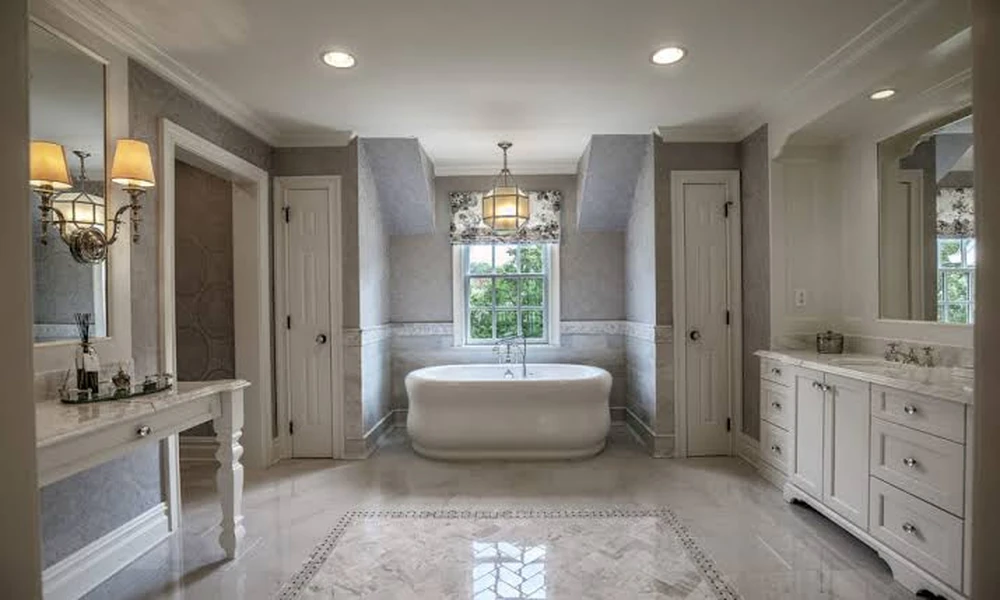

A bathroom has always been more than a functional space. Over the decades, it has evolved from a purely practical room into one that reflects comfort, efficiency, wellness, and personal style. Understanding how bathroom remodeling has changed over time helps homeowners make thoughtful decisions when planning their own renovation.
The Early Years
In the middle of the twentieth century, most residential bathrooms were designed with simplicity in mind. Standard bathtubs, compact vanities, ceramic tile, and basic plumbing fixtures dominated the market.
Remodeling projects during this period typically focused on replacing worn fixtures rather than redesigning the space. Storage was minimal, lighting was often limited to a single overhead fixture, and accessibility was rarely considered.
Timeline
1950s
Traditional bathrooms emphasized durability over customization.
↓
1960s
Colored fixtures, decorative tile, and larger mirrors became increasingly popular.
↓
1970s
Homeowners began experimenting with bigger vanities and more personalized finishes.
The Turning Point
The 1980s and 1990s marked a significant shift in bathroom design. Homeowners no longer viewed the bathroom as merely functional-they began seeing it as an important part of the home’s overall comfort and value.
Professional bathroom remodel services expanded beyond replacing fixtures to include complete redesigns, improved layouts, upgraded plumbing systems, and enhanced lighting.
Walk-in showers, dual-sink vanities, improved ventilation, and moisture-resistant materials became increasingly common.
Historical Callout
The greatest change during this period was not the materials themselves-it was the growing emphasis on how people actually used the space every day.
Comparison
| Earlier Bathrooms | Modern Remodeling Goals |
| Basic functionality | Daily comfort |
| Limited storage | Organized living |
| Small mirrors | Brighter, layered lighting |
| Standard fixtures | Personalized features |
Modern Developments
Today’s bathroom renovations combine technology, design, and practicality.
Many homeowners researching bathroom renovation services are interested in more than aesthetics. They look for energy-efficient fixtures, improved storage, better ventilation, durable materials, and layouts that support changing family needs.
Modern bathrooms frequently include:
- Walk-in showers
- Floating vanities
- LED lighting
- Quartz countertops
- Large-format porcelain tile
- Water-efficient plumbing fixtures
- Improved waterproofing systems
At the same time, remodeling professionals place greater emphasis on hidden improvements such as moisture barriers, ventilation, and quality installation-elements that significantly influence long-term performance.
Timeline
2000s
Spa-inspired bathrooms became increasingly popular.
↓
2010s
Open layouts, frameless glass showers, and minimalist design gained momentum.
↓
Today
Comfort, accessibility, sustainability, and timeless design guide most renovation decisions.
Future Trends
Bathroom remodeling continues to evolve as homeowners seek spaces that balance beauty with everyday functionality.
One growing trend is designing for long-term flexibility. Rather than remodeling only for current needs, homeowners increasingly consider accessibility, aging in place, water conservation, and easy maintenance from the beginning of the project.
Another noticeable trend is maximizing smaller spaces. Homeowners researching remodeling a small bathroom often prioritize smarter storage, brighter lighting, and efficient layouts instead of increasing square footage.
Looking Ahead
| Today’s Focus | Tomorrow’s Direction |
| Energy efficiency | Greater sustainability |
| Smart fixtures | More connected home technology |
| Durable materials | Longer product lifecycles |
| Minimalist layouts | Flexible, adaptable spaces |
Bathroom design has changed dramatically over the past several decades, but one principle has remained constant: successful renovations begin with understanding how people actually live. While materials, fixtures, and technology continue to evolve, the best bathroom remodels are those that improve everyday routines through thoughtful planning, quality craftsmanship, and timeless design. By appreciating how remodeling has progressed over time, homeowners can make choices that remain practical and beautiful well into the future.
