
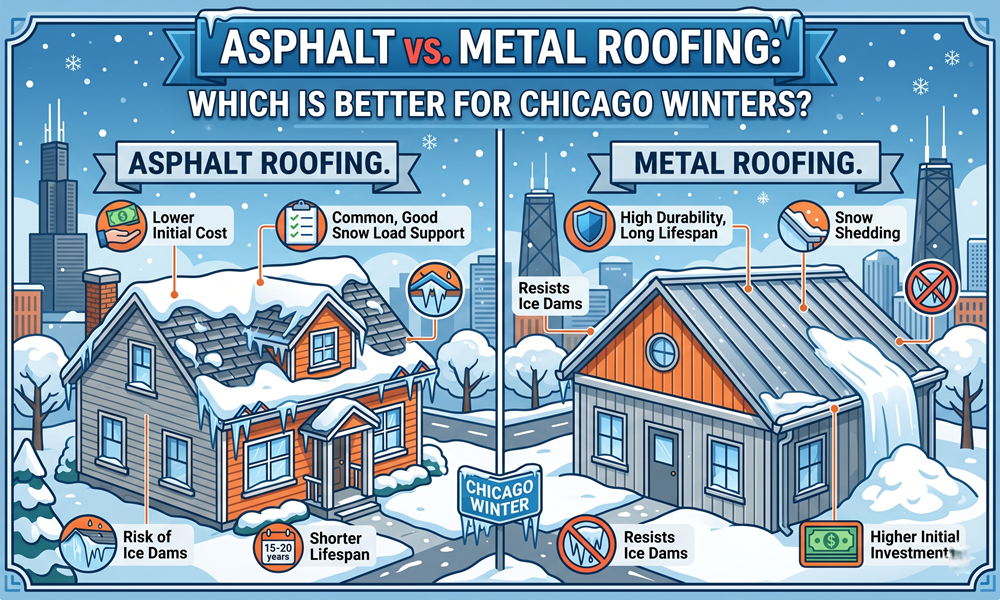

Chicago winters do not ease into the season. They arrive with sub-zero temperatures, heavy snowfall, freeze-thaw cycles that crack and split materials, and ice dams that force water backward under shingles. The roof over your home is the only barrier between that climate and your living space, which makes material selection one of the most consequential decisions a Chicago homeowner can make.
The two materials that dominate residential roofing in the Chicago area are asphalt shingles and metal roofing. Both have genuine strengths, and both have limitations that matter in a cold-weather climate. This comparison walks through the key performance factors so you can make an informed decision for your specific situation.
How Each Material Handles Cold and Snow
Asphalt shingles are the most common residential roofing material in North America, and for good reason. Modern architectural asphalt shingles are engineered to flex through temperature changes without cracking, and they perform reliably in most winter conditions. The challenge with asphalt in Chicago is the freeze-thaw cycle. Water that works its way under shingles during a warm spell and then refreezes can expand and force shingles to lift or crack. Over many seasons, this mechanical stress degrades the seal strips and shortens the lifespan of the roof.
Metal roofing handles freeze-thaw cycles more effectively. Metal does not absorb moisture, so there is no water to freeze within the material itself. Metal roofs also shed snow more readily than asphalt because of their smooth surface and natural heat conductivity, which reduces static snow load on your roof structure during heavy accumulation. LEN Roofing installs both asphalt and metal systems across the Chicago area and can walk you through the specific performance differences for your home’s structure and exposure.
Ice Dams: A Critical Difference
Ice dams form when heat escaping from the attic melts snow on the upper portion of the roof, and that meltwater runs down and refreezes at the colder eave. The resulting ice ridge traps water and forces it backward under the roofing material. Ice dams are one of the most common causes of interior water damage in Chicago homes during winter.
Asphalt shingles can be installed with ice and water shield underlayment along the eaves, which provides meaningful protection, but the shingles themselves are still vulnerable if the ice dam is severe enough. Metal roofing, particularly standing seam metal, is inherently more resistant to ice dam damage because its continuous panels leave fewer penetration points for water. Combined with proper attic insulation and ventilation, a metal roof significantly reduces ice dam risk.
Longevity and Cost Comparison
Asphalt shingles in the Chicago climate typically last 20 to 25 years with proper maintenance. Higher-end architectural shingles can push toward 30 years under favourable conditions. The upfront cost is lower than metal, making asphalt the practical choice for homeowners who need to manage immediate expenditure.
Metal roofing carries a longer expected lifespan of 40 to 70 years depending on the specific product. The upfront cost is significantly higher, often two to three times the price of asphalt installation. However, when you factor in one replacement cycle versus three over the same period, the lifetime cost gap narrows considerably. Metal also tends to carry more favourable insurance terms in some markets due to its fire resistance and durability in hail events.
Which Is Right for Your Home?
There is no universal answer. If you have a relatively new home with good attic insulation, need to manage upfront costs, and want a reliable roof that performs well through typical Chicago winters, quality architectural asphalt shingles from a reputable manufacturer remain a strong choice. They work, they are well-understood, and experienced contractors can install and service them efficiently.
If you are replacing a roof for what you intend to be the last time, if your home has had recurring ice dam problems, or if you are building a higher-end property where long-term material performance matters more than initial cost, metal roofing deserves serious consideration. The upfront investment pays out over decades, and the performance difference in harsh winters is measurable.
Whichever direction you lean, installation quality matters as much as the material itself. Getting a detailed assessment of your roof structure, attic conditions, and budget is the right first step. To explore both options and understand what each involves for your specific home, take a closer look at the available roofing services in Chicago and schedule an on-site evaluation before making a final decision.
