

Key Takeaways
Standard parking solutions often miss the mark. Inefficient layouts, poor space utilization, and confusing navigation lead to frustrated drivers and rising costs.
Traditional parking designs may hurt property values too, hinting at possible issues to potential buyers and diminishing the overall appeal of a property.
Puzzle parking systems take space efficiency to a whole new level. Through vertical stacking and automation, they can potentially double, even triple, parking capacity within the same footprint.
The tech behind puzzle parking systems? It’s all about mechanical lifts, automated controls, and precision sensors. These features boost efficiency while minimizing human error and damage risks.
Investing in puzzle parking systems could result in long-term savings by slashing maintenance needs, reducing energy costs, and increasing property values over time.
Selecting the right puzzle parking system hinges on specific needs. Residential setups demand user-friendliness, while commercial ones should focus on speed and capacity.
When choosing a puzzle parking system, keep an eye on flexibility, scalability, real-time monitoring, and intuitive user interfaces-these features enhance overall functionality.
Why Standard Parking Solutions Fall Short
The Pitfalls of Traditional Parking Designs
We’ve all had that moment-squeezing into a tight spot, dodging pedestrians, and praying you don’t scrape the paint. So annoying! And let’s be honest, standard parking solutions often make things worse. Conventional parking lots accumulate chaos. Picture this: endless rows of cars, each driver locked in a battle for space. It looks sturdy at first glance, but scratch the surface and you’ll find serious flaws. Tight spaces, poor layouts, and inefficient land use are just scratching the surface.
And those signs? Often more confusing than helpful. Deciding if you’re in the right place or figuring out how many spaces remain? It’s enough to leave anyone shaking their head. And don’t get me started on payment systems-who really carries cash anymore?
- Limited space utilization
- Confusing navigation
- High maintenance costs
Here’s a thought: traditional parking designs can actually reduce property values. Yup, you heard that right. An awkward parking setup can signal to potential buyers that the entire property’s worth might be in question. Who kicks off their home search by worrying about parking hassles?
When Convenience Meets Chaos: Real-Life Parking Nightmares
Have you ever circled a block, desperately hoping for that magical parking spot to appear while time slips by? It’s sheer agony. You glance at your watch, and suddenly that event you were looking forward to feels like a fading dream. Trust me, I’ve been there. Despite technological advances, cities still cling to outdated parking strategies. It’s a mismatch that paints modern living in a poor light.
Urban sprawl makes these problems worse. With many cities seeing population booms, parking has morphed into a full-on war. Inefficient designs can lead to traffic jams, lengthy commutes, and skyrocketing stress. It’s like throwing gasoline on a fire, with everyone’s tempers flaring as they try to inch ahead in traffic.
“Parking should be a breeze, not a battle.”
The unfortunate reality is that traditional parking systems simply can’t keep pace with today’s needs. If we’re aiming for convenience in our lives, we must rethink our approach to parking.
How Puzzle Parking Systems Work: The Inner Mechanics
The Symphony of Automated Parking: An Up-Close Look
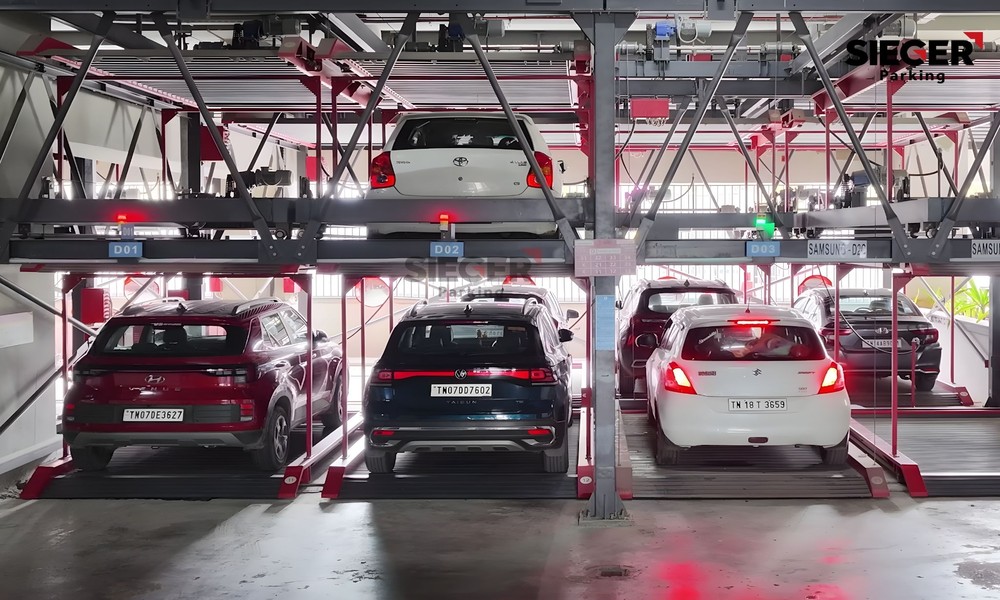
Alright, so let’s dive in. Have you seen a puzzle parking system in action? It’s pretty mesmerizing. Imagine a beautifully orchestrated dance-cars sliding into their designated spots like performers in a grand symphony. It’s not simply magic, it’s engineering efficiency at its finest.
Each vehicle is positioned algorithmically for maximum space optimization. Space efficiency really is the name of the game. These systems can double or even triple how many cars fit in a given area, all thanks to vertical stacking and automation. It’s like turning a cramped apartment into a spacious loft. Plus, since there’s minimal human involvement, the chances of damage-to the car or the surrounding spaces-drop significantly.
- Vertical stacking increases capacity
- Automated systems cut down human error
- Minimal land requirement enhances urban planning
In theory, it sounds fantastic, right? In practice? I’ve seen it perform wonders in urban environments. The first time I checked it out was at a commercial venue. Cars glided in and out like clockwork while folks carried on with their day, seamlessly. This isn’t just a dream; it’s the future unfolding.
Decoding the Technology: What Makes Puzzle Parking Click
So, how does this high-tech marvel work behind the scenes? You’ve got mechanical lifts, automated controls, and precise sensors doing the heavy lifting. Not to mention smart software systems managing everything from efficiency to reliability. Each part plays its role in creating a well-oiled machine, where parking isn’t just functional; it’s a whole new experience.
Here’s a quick breakdown of the components:
- Mechanical lifts that transport vehicles up and down.
- Automated controls that handle the parking sequences.
- Sensors that give real-time updates about space availability.
- User interfaces, often accessible via smartphone apps for extra convenience.
This tech doesn’t just streamline parking-it’s a game changer. Remember the last time you found yourself driving in circles, hunting for a stopping point? That’s outdated thinking. Puzzle parking systems turn the efficiency dial up to eleven, forever changing the narrative around parking spaces.
Cost vs. Value: Are Puzzle Parking Systems Worth It?
Analyzing Long-Term Savings Over Initial Investment
Let’s talk turkey for a second. People love to focus on immediate costs when it comes to new parking innovations. Sure, the upfront investment in a puzzle parking system can feel steep. But wait-long-term savings tell a different story. Energy expenses drop, maintenance needs go down, and many systems even come with financing options to ease that upfront hit. Surrounding property values can also climb due to the enhanced functionality.
Plus, with the ongoing urban land crisis, these systems can save space by parking cars more effectively. It’s like playing real-world Tetris, freeing up valuable land for better uses. That’s a win-win in my book.
- Lower maintenance costs over time
- Revenue generation from increased parking availability
- Potential for property value boosts
When you run the numbers, it becomes clear: if you’re stuck on just the immediate price, you’re missing the bigger picture.
Hidden Costs of Conventional Parking Structures You Can’t Ignore
And let’s not ignore those lost opportunity costs, shall we? Space that could’ve generated revenue sits idle while people battle inefficient parking. It’s like leaving money unclaimed. Seriously. How many deals have stagnated because parking was such a headache?
“A reliable parking system pays for itself.”
Time to wake up! Business owners and city planners must realize that smart investments in parking tech can save them more than a few bucks. It has the power to transform whole areas.
Choosing the Right Puzzle Parking System for Your Needs
Residential vs. Commercial: Tailoring Solutions to Your Space
Here’s where it gets fascinating. Not all puzzle parking systems are created equal. When looking at options, residential needs are often worlds apart from commercial requirements. A home system should focus on ease of use, while commercial setups aim to amplify parking capacity without sacrificing speed.
Customizing solutions is crucial. For residential scenarios, you’ll want easy access and simplicity. Picture features like remote control capabilities and user-friendly interfaces, while businesses might want maximum throughput and constant operation. I’ve seen systems flop when developers overlook these differences.
- Residential: Focus on usability, space efficiency, and safety.
- Commercial: Emphasis on speed, high capacity, and compatibility with current infrastructure.
Keep your audience in mind! Whether you’re renting out a posh apartment or managing a bustling commercial hub, understanding your specific needs will direct your investment wisely.
Key Features to Look For in a Puzzle Parking System
Ready to buy? Start by looking for these essential features when evaluating a puzzle parking system:
- Flexibility: Customization options for various spaces.
- Scalability: Solutions that allow for easy expansion.
- Real-time monitoring to enhance efficiency with alerts.
- User interfaces that are intuitive for both drivers and operators.
When you have these components in place, you’re not just buying a parking system. You’re investing in a future where parking works for you, not against you.
In this fast-paced, ever-evolving tech world, sticking with traditional parking is a gamble no one can afford. Embrace the puzzle parking system and watch as your mindset about parking-and maybe even your life-gets a positive shift.
FAQ
How do puzzle parking systems compare in safety to traditional parking solutions?
Safety in puzzle parking systems usually takes the lead, mainly due to reduced human interference. Fewer drivers translate to fewer accidents. Plus, the structural integrity is often strengthened with advanced engineering, making them more robust than conventional lots.
Can puzzle parking systems be integrated with electric vehicle charging stations?
Definitely! Many modern puzzle parking systems are designed for electric vehicles. They can accommodate charging stations, allowing seamless energy refueling while maximizing space. It’s not just about parking; it’s about keeping pace with the electric vehicle surge.
What maintenance should I expect with a puzzle parking system?
While puzzle parking systems typically require less maintenance than traditional structures, they still need some care. Regular checks on mechanical lifts and sensors are necessary, but when compared to the continuous upkeep of standard lots, it’s a walk in the park.
Are there any downsides to using puzzle parking systems?
Sure, nothing’s perfect. Initial costs might be high, and there’s a learning curve for users who aren’t familiar with automated systems. Still, the long-term advantages often outweigh these hurdles, especially in urban areas where space is scarce.
What happens during a power outage with a puzzle parking system?
Power outages can cause delays in puzzle systems, but many come with backup power solutions. You’re not completely stranded. Trained staff can manually override the system, ensuring vehicles can still be retrieved during emergencies.
Can puzzle parking systems be built in existing structures?
Absolutely. Retrofits are often doable, but it depends on the current layout and structure of the building. A comprehensive assessment is crucial, but if executed correctly, it can vastly improve the parking experience in an otherwise outdated facility.
What’s the lifespan of a typical puzzle parking system?
With proper maintenance, a puzzle parking system can last 15 to 20 years or even longer. Many components are crafted for durability, but factors like usage intensity and maintenance can affect how long it lasts. You definitely want a system that can withstand the test of time.
How can I assess if a puzzle parking system is right for my property?
Start by analyzing your specific needs. Think about factors like available space, expected vehicle volume, and user experience. It’s wise to consult with experts for tailored recommendations. A fitting puzzle parking solution can seriously enhance your property’s parking capabilities.
Useful Resources
