
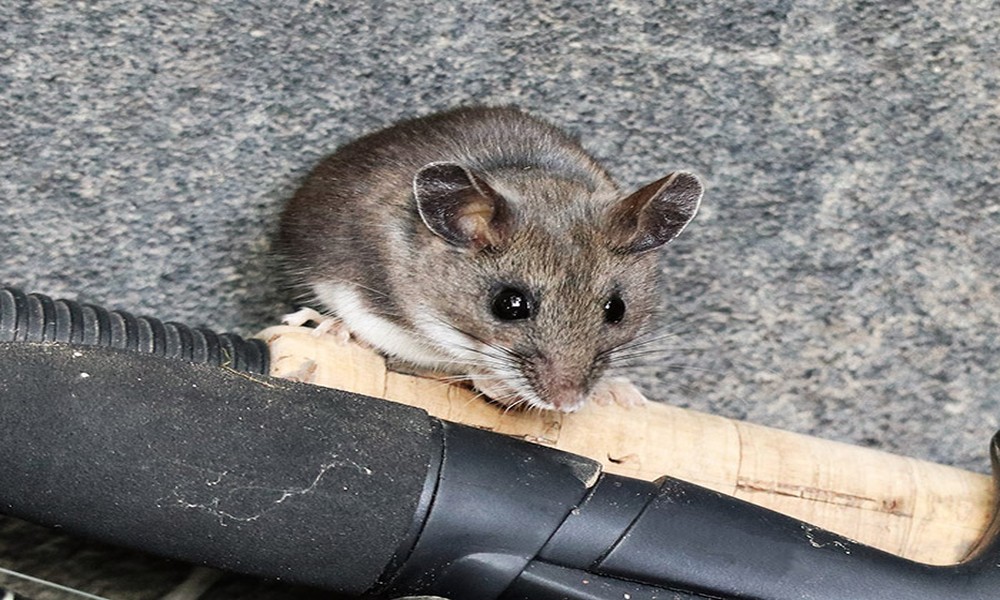

The first call most Kansas City pest control companies field in early October is some version of the same report: droppings in a kitchen drawer, scratching above a bedroom ceiling at night, or a mouse caught on a snap trap in the garage. By Halloween the call volume has doubled. Homeowners who set traps last year and assumed the problem was solved are surprised to find the mice back on schedule, because the traps never fixed the underlying issue. Companies that handle rodent work across Clay, Clinton, and Ray counties, including long-running local operators like ZipZap Termite & Pest Control in Lawson, see the same pattern in most neighborhoods every fall, and the reason it repeats is almost always structural rather than behavioral.
What Triggers the October Shift
House mice (Mus musculus) and deer mice (Peromyscus maniculatus) are the two species driving most of the indoor activity in the Kansas City metro. Both are active year-round outdoors, but cooler nighttime temperatures, shortening day length, and declining outdoor food supply push them toward any warm, dry, food-adjacent shelter they can find. Residential structures in Kansas City, Liberty, Gladstone, and the surrounding suburbs check every box.
The biology compounds the problem. A female house mouse can produce a litter of five to eight pups every three weeks under favorable conditions, with pups reaching sexual maturity themselves in about six weeks. A pair of mice that enters a home in October can realistically become thirty or more by March if conditions inside are suitable. Most homeowners only notice a fraction of the actual population.
Why Last Year’s Traps Did Not Solve Anything
Snap traps, glue boards, and bait stations kill individual mice. They do not address entry. That distinction is why the same home produces a new infestation every fall despite the homeowner’s feeling that they “got rid of them” the previous spring.
A mouse can pass through a gap roughly the size of a dime, or about a quarter inch. Young mice can squeeze through even smaller openings. The University of Missouri Extension and the Centers for Disease Control both use the dime reference in their rodent exclusion guidance because it is the practical threshold that separates a sealed home from an open one. Most houses in the metro have dozens of gaps at or above that threshold, and none of them are the obvious ones a homeowner typically pictures.
The Entry Points That Get Missed
The front door is not how mice get in. The entry points that actually account for indoor populations are almost always secondary penetrations through the building envelope.
Dryer vent terminations where the wall sleeve has separated from the siding. Weep holes in brick veneer, which are necessary for drainage but often unscreened. Utility penetrations where cable, internet, gas, and HVAC lines pass through the foundation or exterior wall. Gaps under garage doors, particularly the corners where the weatherstripping pulls up. Roofline gaps where soffit boxing meets brick or siding. Chimney chases with failed flashing. Crawl space vents with damaged screening. AC line sets where the foam collar has degraded. Attached garage thresholds with warped weatherstripping.
A thorough exterior inspection often identifies twenty or thirty access points on a typical mid-sized Kansas City home. Each is an independent vulnerability, and closing nineteen of twenty still leaves the structure open.
What Actually Works as Long-Term Control
Effective rodent control in a Kansas City pest control context comes down to three coordinated elements.
Exclusion is the structural fix. Sealing every gap above a quarter inch with appropriate materials: hardware cloth backed with sealant for larger openings, copper mesh for pipe collars and wider penetrations, and rigid screening for vents and weep holes. Foam alone does not work. Mice chew through polyurethane spray foam readily, and expanding foam used without a mesh backer is one of the most common failed repairs encountered during reinspection.
Targeted interior trapping handles the mice already inside at the time of service. Snap traps placed perpendicular to walls in activity zones, baited with peanut butter or a small amount of cheese, catch more than bait stations in typical residential settings.
Exterior bait stations reduce the outdoor population pressure during the fall migration window. Placement matters. Stations along the foundation, near detached outbuildings, and in obvious runways intercept mice before they find an interior entry point. Tamper-resistant stations are required under most label instructions and are standard professional practice.
Why Rodenticide Use Deserves Context
Retail rodenticide products have come under tighter EPA regulation over the past decade, with several second-generation anticoagulants restricted from consumer sale due to documented secondary poisoning of owls, hawks, foxes, and domestic pets. Homeowners using older stocks or commercial-grade products purchased through informal channels can inadvertently poison raptors and small predators that consume dead or dying mice.
Professional Kansas City pest control providers work within current EPA label requirements, use tamper-resistant stations as required, and generally rotate baits to manage resistance. That regulatory compliance matters more than most homeowners realize, both for wildlife protection and for keeping the legal liability off the property owner.
Hantavirus and Other Reasons Not to Wait
Deer mice in Missouri are a confirmed vector for Sin Nombre virus, the pathogen responsible for hantavirus pulmonary syndrome. Cases are rare nationally but the Missouri Department of Health tracks positive samples in the state’s rodent population annually. The relevant precaution is to avoid sweeping or vacuuming dry droppings, which aerosolizes the virus. Droppings should be dampened with a bleach-water solution and wiped up with a paper towel before disposal.
Mice also produce urine and fecal contamination along runways, chew through electrical wiring (a documented cause of house fires), and can carry fleas and ticks into the structure. The mouse itself is a vector for problems well beyond its own presence.
The Short Version
The mouse problem that returns every October is not a failure of last year’s traps. It is a structural issue that traps cannot solve. Entry points at quarter-inch gaps across the building envelope are the real driver, and closing them is the only intervention that changes the pattern year over year. For Kansas City homeowners tired of the same fall cycle, a Kansas City pest control provider such as ZipZap Termite & Pest Control can complete a full exclusion inspection, seal the identified access points, and combine that work with trapping and exterior stations for a result that holds through the winter rather than resetting next October.
